Lion in St. Mark’s Square is from China
A recent study at the University of Padua finds that the winged-lion in St. Mark’s Square – the emblem of medieval Venetian statehood – was once a Tang Dynasty tomb guardian.

A recent study at the University of Padua finds that the winged-lion in St. Mark’s Square – the emblem of medieval Venetian statehood – was once a Tang Dynasty tomb guardian.
Over the past few months, archaeologists at George Washington’s Mount Vernon have uncovered some 35 bottles of preserved berries from the mansion’s cellar. The bottles have been buried for approximately 250 years, and several unopened bottles have yielded perfectly preserved fruit, liquid, and other organic residues. The bottles are undergoing cleaning and preservation, and the contents are being scientifically analyzed by the US Department of … Read more
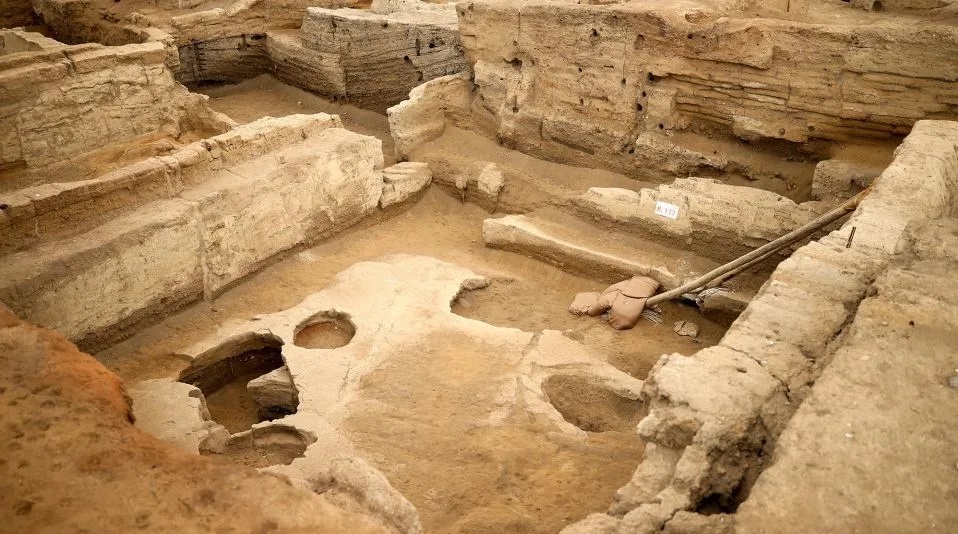
A team of researchers from Anadolu University were excavating a bakery at the ancient city of Çatalhöyük, uncovered an artifact that has been identified as an unbaked loaf of bread from around 6600 BCE. Collaborating scientists detected a combination of wheat, barley, and pea seeds in the small, round loaf. They also found that the loaf had been fermented, which preserved the starches, and made … Read more
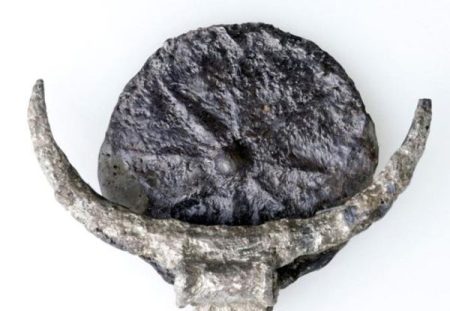
A bronze-age group tomb in the Dahwa region of Oman has yielded several pieces of silver jewelry with Harappan designs – indicating period trade between the Indus Valley people and the Umm al-Na culture which flourished in Oman from 2600-2000 BCE. The star medallion pictured above is one of the pieces recovered. The site, which was excavated from 2013 – 2021, also produced remains of … Read more
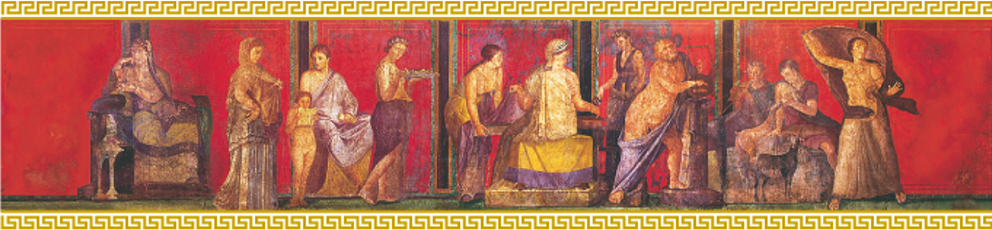
Have ever wondered what sort of wine was served in an ancient Roman banquet? You know, the kind made famous by TV dramas like I Claudius, where guests lounged for hours, picking at sumptuous delicacies and were entertained by musicians and artists from around the world? Well now you can savor at least one wine reconstructed from ancient varietals in the area near Pompeii. The … Read more
French archaeologists have recently uncovered some assemblages on Myanmar’s lower Kra isthmus that shed light onto maritime Silk Road trading communities beginning in 400 BCE. Given the geographic position of the isthmus between the Andaman Sea and the Gulf of Thailand, the Myanmar sites served as a stopover for Chinese and other east Asian traders headed west, and for Saudi, Persian, and Indian traders headed … Read more

Sometimes, perception can be like a flash of lightning that changes the world forever. Once something is seen and understood, there is no unseeing or unknowing. A few years back, I had such a food-related epiphany. I was in Istanbul and went into one of the many great food and spice shops that line the streets for some Iranian saffron to take back to the … Read more
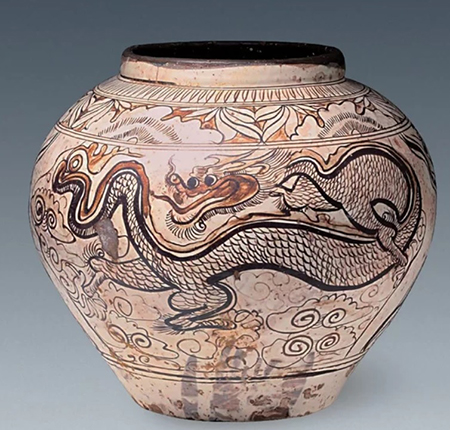
A shipwreck dating from the Mongol-led Yuan dynasty (1271-1368 ACE), has recently been analyzed by a team of archaeologists from the Shandong Institute of Cultural Relics and Archaeology in China. The ship was found at a construction site in Heze City in 2010, and has been under study since that time. The ship itself was of wooden construction and measured over 21 meters long (over … Read more
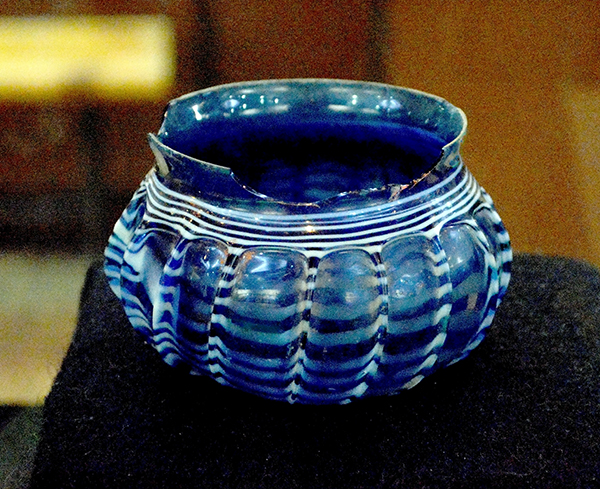
This bowl is a fine example of pinched-glass craftmanship. It is of Roman (possibly Byzantine) origin and is believed to be dated to the 5th Century ACE (based on the age of the tomb which is from the Hunnu period.) It is also proof of the power of the Silk Road on both trade and politics, because it was found a few years back in … Read more
Raiders… conquerors… fierce in battle and strong in family. These are the images that the world has of Vikings. We know where they lived, and to some degree how they made a living. We know which gods they worshipped and how. Yet the bulk of our knowledge consists of broad brush strokes that omit the nuances of everyday life. The Vikings recorded many things, from … Read more
Last year I had the pleasure of visiting the Areni-1 cave in southern Armenia. Many unique and noteworthy artifacts have been found in the cave, including leather shoes; fine linen fabric, woven reed mats, and pottery vessels of different styles and periods. In addition, preserved within the cave is also the site of the world’s oldest known winery. When the archaeologists studying the site announced … Read more
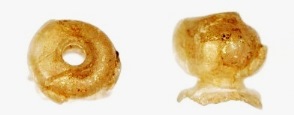
New evidence of the power and reach of the Silk Road seems to be puzzling and mystifying scholars. Roman jewelry was recently found in in a Japanese tomb dating from the 5th Century ACE. Why this startles anyone is beyond me. The network of maritime and land traders that we now know as the Silk Road linked west and east as far back as 2000 … Read more
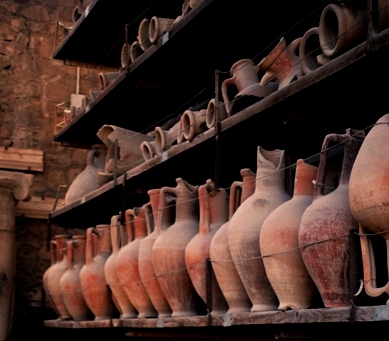
You heard it here first folks: Over the course of the next six months or so, the kitchens of Chez Kelley are going to make fish sauce or Roman garum. More accurately, we are going to compare easy or quick methods with traditional outdoor fermentation. If we haven’t been run out of the neighborhood, we will report our results in an end of summer post. … Read more
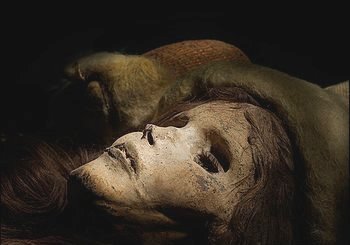
The University of Pennsylvania Museum displays artifacts from Caucasian travelers on the Silk Road. In a desolate, eastern world of salt and sand, where blinding windstorms were common and potable water was rare, the mummified remains of people from the west have been found. Why they died, where they came from and where they were traveling to is unclear, but for a short time, they … Read more
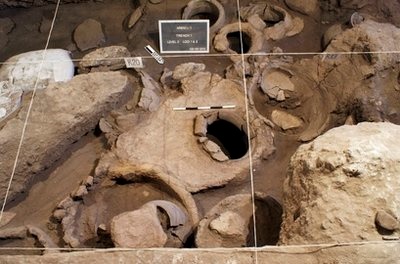
The earliest known winery has been uncovered in a cave in the mountains of Armenia. A vat to press the grapes, fermentation jars and even a cup and drinking bowl dating to about 6,000 years ago were discovered in a cave complex near Areni, Armenia by an international team of researchers. They also found grape seeds, remains of pressed grapes and dozens of dried vines. … Read more
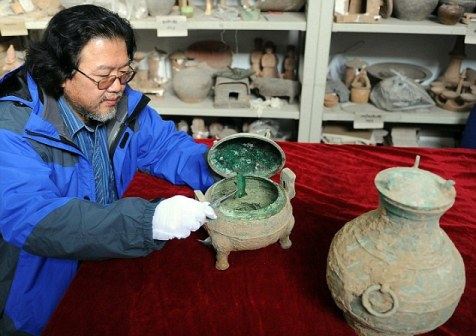
Imagine the world around 400 BCE. The Phoenicians in Carthage were the dominant power in North Africa; Socrates had just been condemned to death; in Mesoamerica, the Olmec civilization entered a period of terminal decline; and a Chinese nobleman was laid to rest in his tomb in Xian with soup and wine to see him through to the afterlife. After 2,400 years the cauldron or … Read more