Indian Curry Through Foreign Eyes #2: Mary Randolph

Mary Randolph

Mary Randolph

Next up on our exploration of curries is Mary Randolph’s Curry from her book, The Virginia Housewife, first published in the United Sates in 1824. Although she was well born, Mary and her husband’s fortunes fell in middle age and The Virginia Housewife was written to help lift her family out of poverty. The Virginia Housewife underwent multiple revisions and no less than 19 editions were published prior to the Civil War. It also continued in circulation and regular use into the late 19th Century. Unfortunately, Mary died in 1828 and didn’t live to see most of those revisions and understand the true impact of her work.

Although not the first published cookbook of US origin, it was the first highly successful one. This may be in part because of the wide range of recipes offered in the book, from Virginian specialties to English, French, and Spanish dishes, to Eastern and Western Indian curries.

The Virginia Housewife, 1824

The Virginia Housewife, 1824

There are two East Indian curry recipes in Mary Randolph’s book: one for catfish and one for chicken. There are also accessory recipes for curry powder and rice dishes to go along with the curry dishes. For the sake of comparison with Hannah Glasse’s chicken curry, I chose to work with Randolph’s chicken recipe. My husband made the catfish curry for us, however, and it was spectacular!

Separated by 50 years from Hannah Glasse’s recipe, Randolph’s recipe is much more sophisticated and complex. It has a much broader compliment of spices in the seasoning and the addition of garlic along with onions helps deepen the savory aspects of the dish.

So, what does it taste like? First off, it is very different from the Hannah Glasse curry.  Nutmeg and mace are the dominant flavors, with turmeric and coriander following.  The onions especially pick up the turmeric flavor, which allows you to taste it as a distinct flavor.  Surprisingly, perhaps, this curry also packs a bit of a wallop in terms of heat with all that Cayenne pepper in the mix.  I would rate it a 4-5 on a scale of modern hot dishes, so don’t be afraid of it.  However, it is a great deal hotter than most early 19th Century food I’ve tasted.  So, enough words. . . on to the recipes.

_____

Crucial to recreation of the dish is the use of Mary’s recipe for curry powder.  As you can see, this mixture of spices is much richer and more complex than the one used in the earlier Hannah Glasse recipe.  That recipe had only turmeric, ginger and black pepper for seasoning.  Mary’s recipe reads:

CURRY POWDER
One ounce turmeric, one do. coriander seed, one do. cumin seed, one do. white ginger, one of nutmeg, one of mace , and one of Cayenne pepper; pound all together, and pass them through a fine sieve; bottle and cork it well – one tea-spoonful is sufficient to season any dish.

Listed in modern form, this recipe reads:

Mary Randolph’s Curry Powder

Ingredients
1 ounce turmeric
1 ounce coriander seed
1 ounce cumin seed
1 ounce powdered ginger
1 ounce nutmeg
1 ounce of mace
1 ounce of Cayenne pepper

Method
Grate nutmeg and turmeric and measure out one ounce of each spice.  Combine with other dried and powdered ingredients and mix.  Grind coriander and cumin seeds separately until fine and combine with other ingredients.  If desired, grind all ingredients together for a few more second to get a more integrated mix.

Now, onto the construction of the curry itself.  Mary’s recipe reads:

TO MAKE A DISH OF CURRY AFTER THE EAST INDIAN MANNER
Cut two chickens as for fricassee, wash them clean, and put them in a stew pan with as much water as will cover them; sprinkle them with a large spoonful of salt, and let them boil till tender, covered close all the time, and skim them well.  When boiled enough, take up the chickens, and put the liquor of them into a pan, then put half a pound of fresh butter in the pan, and brown it a little; put in two cloves of garlic, and a large onion sliced, and let these all fry till brown, often shaking the pan; then put in the chickens, and sprinkle over them two or three spoonsful of curry powder; then cover the pan close, and let the chicken do till brown, often shaking the pan; then put in the liquor the chickens were boiled in, and let all stew till tender; if acid is agreeable, squeeze the juice of a lemon or orange in it.

My interpretation of the recipe follows:

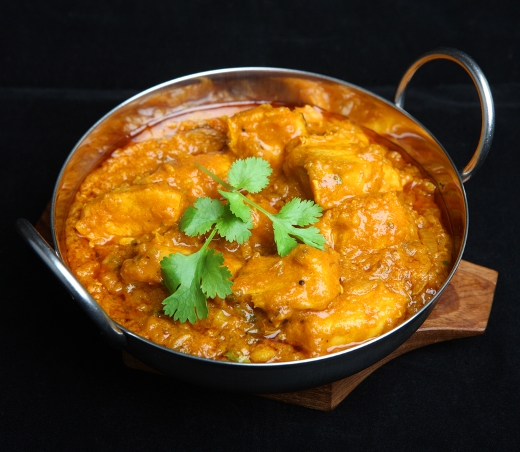
Mary Randolph’s Butter Chicken (1824)

Ingredients
1 pound chicken breast meat, cut into bitesize pieces
1 stick unsalted butter
1-2 teaspoons garlic, minced
1 large or two medium yellow onions, peeled, sliced and separated
3 heaping teaspoons curry powder (prepared from the recipe above)
1 teaspoon salt
2-3 cups low-salt or homemade chicken stock
¼ -1/3 cup fresh lemon or orange juice

Method
Melt butter in a saucepan and when warm add the chicken and sauté until the meat is opaque and starting to color.  Remove chicken with a slotted spoon and set aside.  Add the garlic and stir well. Then add the onions and sauté for 5-8 minutes, stirring frequently until they start to soften.

Add the curry powder and salt and if dry, add a small amount of the stock to moisten the pan and spices.  Sauté for 2-3 minutes to allow flavors to blend.  Then add the chicken and any accumulated juices back into the pan and stir well.  Add stock to almost cover the meat and stir again. Cook to warm over medium heat, stirring occasionally.

When warm, cover and reduce heat to so covered chicken cooks steadily at a medium simmer for 20-30 minutes or until chicken softens.  Stir occasionally while chicken cooks.

When the chicken is tender, uncover and if necessary let sauce reduce a bit.  When nearly done, reduce heat to lowest and add the lemon or orange juice and stir in well.  Cook to heat and serve with rice or bread.

Mary Randolph's Chicken Curry

Mary Randolph’s Chicken Curry

_____

As you can see, I just couldn’t bring myself to use two sticks of butter for this dish.  It worked very well with one stick and your cardiovascular system with thank me for the reduction.  Unlike the Hannah Glasse recipe, there is no cream added.  Perhaps the large quantity of butter was supposed to offset the absence of cream, but one stick (which is about 3 times the amount of butter I use in modern butter-based curries) works nicely, and serves to blanket and unite the flavor of the spices in the curry powder.

The quantity of nutmeg and mace is interesting to me.  Firstly, it makes it probable that this dish is an adaptation of a Mughali recipe which would have been relatively close to but still different from the Parsi roots of Butter Chicken.

Secondly, at Mary Randolph’s time, this recipe would have been very expensive to make because of the price of nutmeg and mace at that time.  Granted, the trees that produce these spices were introduced by the French into the New World (French Guyana) in the mid-1770s, and pirated by the British to their Grenadian colonies a few years after that.  However, nutmeg trees grow very slowly (I know, I have one) and I don’t think that there would have been enough Grenadian nutmeg on the colonial market by the 1820s to make those spices affordable.  I may be miscalculating, but I still think that it would be at least a couple of decades after Mary Randolph that the prices of those spices would have fallen.  So, if that line of reasoning is correct, this would be a special dish, perhaps for a celebration, for a special meal, or for demonstration of conspicuous consumption.

On another note, we tried it with both lemon and orange juice and like it both ways.  Although, most modern Indian dishes tend to use lemon juice, the orange juice lends a gentler, more “Persian” flavor, which harken back to the roots of the dish.

This is the last historical curry recipe I’m going to post before my trip (Uzbekistan, Kazakhstan, Georgia and Armenia), but I will continue this exploration at some point after my return. I have an early-to-mid 18th Century Dutch-American recipe for Butter Chicken from Anna de Peyster’s manuscripts held by the Van Cortland trust, and a Facebook colleague has pointed out some very early recipes in manuscripts from the 17th Century that I simply have to try. So stay tuned for more on Indian Curries Through Foreign Eyes.

(Words and interpretation of recipes by Laura Kelley. Photo of The Virginia Housewife from the Virginia Historical Society; Photo of Mary Randolph’s Butter Chicken by Kumikomurakamicampos @ Dreamstime.com; other images in the public domain)

Thackeray’s Ode to Curry

Poem to Curry

- William Makepeace Thackeray (1811 -1863)

Three pounds of veal my darling girl prepares,
And chops it nicely into little squares;
Five onions next procures the little minx
(The biggest are the best, her Samiwel thinks),
And Epping butter nearly half a pound,
And stews them in a pan until they’re brown’d.

What’s next my dexterous little girl will do?
She pops the meat into the savoury stew,
With curry-powder table-spoonfuls three,
And milk a pint (the richest that may be),
And, when the dish has stewed for half an hour,
A lemon’s ready juice she’ll o’er it pour.

Then, bless her! Then she gives the luscious pot
A very gentle boil – and serves quite hot.
PS – Beef, mutton, rabbit, if you wish,
Lobsters, or prawns, or any kind fish,
Are fit to make a CURRY. ‘Tis, when done,
A dish for Emperors to feed upon.

Sound like the lady could be making Hannah Glasse’s curry – only with veal, no? A delightful example of 19th Century food porn poetry with big onions, little minxes, savory stews and hot pots. As an Englishman born and initially raised in Kolkata by parents both with ties to the East India Company, Thackeray wrote about something he knew well – curry.  Something to amuse you as we continue on our journey examining curry through foreign eyes.

For more on the proper (traditional) definition of food porn, see my post on The Lotus Eaters from 2010. (Words except cited verse by Laura Kelley.)

Indian Curry Through Foreign Eyes #1: Hannah Glasse

I have long been fascinated by concepts of “I and other”, or the many ways we separate what is familiar (self) from what is not familiar (non-self). By defining what is not self, we are in fact defining self. One can hear small children do this when misclassified by gender; most adamantly declare that they are not members of the opposite sex. “I and other” are also evident in beautiful symbolic ways when considering the movement of ideas and beliefs through societies. The newly introduced idea is at first foreign, complete with unfamiliar trappings. As the idea flows through society and is adopted, the foreign elements are shed and replaced by the familiar.

Depictions of Buddha: Caucasian and Asian

Depictions of Buddha: Caucasian and Asian

One place to see this is operation is at the Boston Museum of Fine Arts, which houses an expansive collection of Asian art. As Buddhism moves out of India and across Asia, first to the west and then the east, early iconography clearly depicts Buddha as Caucasian (Gandahara style), even if the work is from the Himalayas, Burma or Western China. As time passes, and Buddhist ideas are adopted across the east, however, religious iconography begins to depict a wide variety of races and ethnicities. Noses become smaller, epicanthic lids are added as the face changes from Caucasian to Asian. Expressions usually remain contemplative and serene, but the varying shapes of the faces are evidence of the triumph of the ideas across space and time.

The “I and other” concept is also of interest in historical cookery, especially when one group is attempting to recreate the cuisine of another. I’ve been looking at early recipes for Indian curry written by non-Indians. So far, I have a small collection of English and American recipes from the 18th and 19th centuries that show curry powders and recipes developing from recipes that merely reminiscent as Indian in the eighteenth century to those that are nearly indistinguishable from modern recipes broken out by geographical region by the end of the nineteenth. The earliest amongst them (so far), is a recipe from Hannah Glasse’s Art of Cookery made Plain and Easy, first published in 1747.

The Art of Cookery, 1774

The Art of Cookery, 1774 edition

Glasse’s book was an important book for its time and was a major reference for home cooks in England and its colonies for more than 50 years after its publication. If you think of it as an early Joy of Cooking, you are just about spot on. It was revised several times during her lifetime, but to avoid bankruptcy she had to sell the copyright and didn’t profit off of most of the sales.  The recipe for the chicken curry that I made below was added in a later edition of the book published in 1774.

The 1774 recipe reads:

To make a currey the Indian way.
TAKE two small chickens, skin them and cut them as for a fricassee, wash them
clean, and stew them in about a quart of water for about five minutes, then strain
off the liquor and put the chickens in a clean dish; take three large onions, chop
them small, and fry them in about two ounces of butter, then put in the chickens and
fry them in about two ounces of butter, then put in the chickens and fry them together
till they are brown, take a quarter of an ounce of turmerick, and a large spoonful of
ginger and beaten pepper together, and a little salt to your palate and strew all these
ingredients over the chickens whilst it is frying, then pour in the liquor, and let it
stew about half an hour, then put in a quarter of a pint of cream and the juice of two
lemons, and serve it up. The ginger, pepper, and turmerick must be beat very fine.

My interpretation of the recipe follows:

Hannah Glasse’s Butter Chicken (1774)

Ingredients
1 pound chicken breast meat, cut into bite-size pieces
3-4 tablespoons unsalted butter
1 large or two medium onions, peeled, sliced and separated
2-3 heaping teaspoons turmeric (the fresher the better)
2 heaping tablespoons ginger, grated or finely minced
2-3 teaspoons black pepper, freshly ground
1 teaspoon salt
2-3 cups low-salt or homemade chicken stock
½ cup heavy cream
¼ -1/3 cup fresh lemon juice

Method
Melt a couple of tablespoons of butter and when warm, add the chicken and sauté until the meat is opaque and starting to color. Remove chicken and set aside. If desired, add the remainder of the butter and then sauté the onions for 5-8 minutes, stirring frequently until they start to soften.

Add the ginger and if dry, add a small amount of the stock to moisten the pan. Sauté for 2-3 minutes and then add the pepper, turmeric, and salt and stir well. Cook for 5 minutes to allow flavors to blend, and then add the chicken and any accumulated juices back into the pan and stir well. Add stock to almost cover the meat and stir again. Cook to warm over medium heat, stirring occasionally. When warm, cover and reduce heat to so covered chicken cooks steadily at a medium simmer for 20-30 minutes or until chicken softens. Stir occasionally while chicken cooks.

When the chicken is tender, uncover and if necessary let sauce reduce a bit. When nearly done, reduce heat to lowest and add the cream and lemon juice and stir in well. Cook to heat and serve with rice or bread.
_____

I used breast meat, because my family doesn’t like to deal with bones unless necessary. Feel free to use chicken on the bone if you prefer, just adapt the cooking time so that the joints move easily and the meat is tender. I’ve also deliberately used a range of ingredients to allow people to adapt the recipe to their desired taste and consistency – that is a wetter or drier curry. Also, to get the most juice out of lemons, roll them well before cutting to break down the internal substance of the fruit before squeezing.
_____

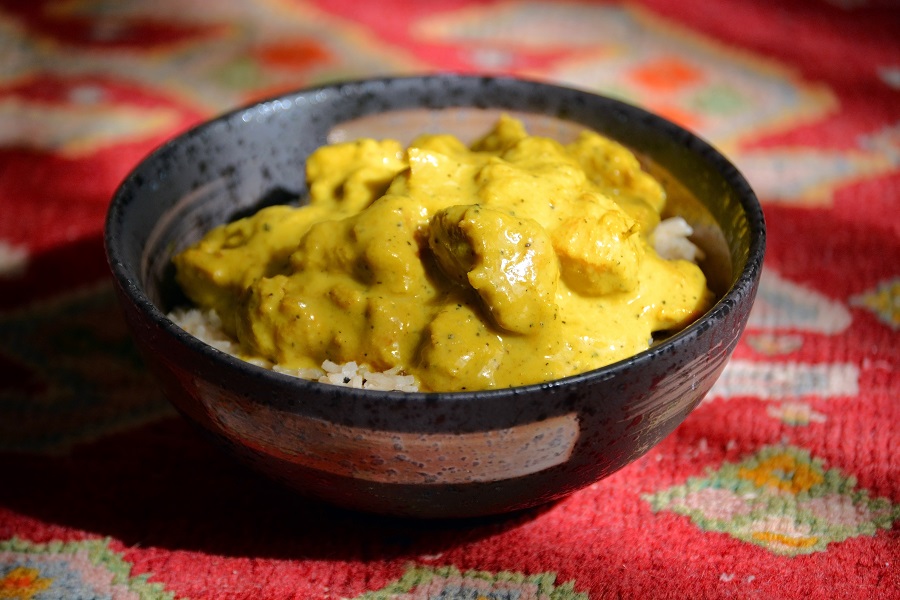
Hannah Glasse Curry, 1774

Hannah Glasse Curry, 1774

The dish is very good, but not quite a modern curry. As you can see from the title of my interpreted recipe, the modern dish most like it is an eastern (Kolkata) butter chicken. However, the Hannah Glasse curry recipe lacks a full complement of spices and the varying amounts of tomato sauce now so often used in the dish. The turmeric and lemon juice are the dominant flavors, with the “heat” coming from the large amount of black pepper used. The heavy cream lends a nice touch that blankets the stronger flavors and tones them down a bit. I served the dish over a plain basmati spiced with a bit of black pepper and cardamom. All in all a delicious meal – and one of historical significance – good for both the body and the mind.

Other early recipes I’ve been working with include Mary Randolph’s 1824 recipes for a nutmeg and mace laden curry powder and her recipes for catfish and chicken curries. Another curry powder we’ve been sampling has been Mrs. Beeton’s 1861 recipe with cinnamon, fenugreek and mustard, which is more like a panchforan than a curry powder. I’ll be writing about these dishes in future posts, so stay tuned. Also, thanks to friend of the Silk Road Gourmet, the beautiful and talented Deana Sidney of Lost Past Remembered, I now have some early Dutch and Portuguese references to plow through looking for early curry recipes.

I will also be scouring earlier books for recipes that claim to be early Indian curries. If you know of any non-Indian recipes earlier than the mid-18th Century, please drop me a line or leave a comment with the reference.

Lastly, I will be on the road in May and may find it difficult to update the site, but please stay tuned for more curries and tales from Central and Western Asia when I return. (Words and adapted recipe by Laura Kelley; Photo of Hannah Glasse Curry, 1774 by Laura Kelley; other images in the public domain).

No Cuisine is an Island #1: An Indian Shellfish Curry

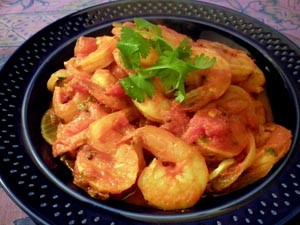
Shrimp or Scallops in a Spicy Tomato Sauce

Shrimp or Scallops in a Spicy Tomato Sauce

The booksigning at the Smithsonian went well. Actually it went very well – we sold and signed all but two of the books purchased for the event. I also really enjoyed meeting people and discussing the book with them. I was pleased to see that people were most interested in the book’s message that cuisines are interconnected, and how dishes we think of as cornerstones of national cuisines actually contain ingredients from all over the world.

To that end, I thought that a demonstration of how globally-sourced ingredients were combined for one of my favorite subcontinental dishes was in order. The recipe is for a delicious sweet, spicy, hot and sour shellfish that will amaze you. The recipe and description are followed by an analysis of ingredients and their origins. What seems like and Indian or subcontinental dish has connections to five continents and many more nations. It is truly global, and should be savored by all.

Shrimp or Scallops in a Spicy Tomato Sauce

Ingredients
1 pound shrimp, peeled, rinsed and deveined, or
1 pound sea or bay scallops
¼ teaspoon cayenne pepper
¼ teaspoon ground turmeric
1 tablespoon mustard or other seed oil
2 tablespoons peanut or light sesame oil
2-3 teaspoons fennel seeds
1 teaspoon yellow mustard seeds
4-5 hot, dried, red chili peppers, torn or chopped
1 large onion peeled, sliced, and separated into crescents
3-4 teaspoons garlic, peeled and chopped
¼ cup of water to moisten (more if needed)
3 teaspoons ground cumin
1 ½ teaspoons ground coriander
1 ½ cups tomato sauce
1 teaspoon tamarind paste dissolved into 2–3 tablespoons lemon juice
1 teaspoon salt
½ cup plain yogurt
1 medium bunch fresh cilantro leaves, chopped (20–30 sprigs)
¼ teaspoon Indian Garam Masala

Method
1. Shuck and devein shrimp or prepare scallops and place into a bowl with the cayenne pepper, turmeric, and a pinch of salt. Stir well, cover, and set aside for at least 1 hour.
2. Heat oil in a sauté pan over medium heat and when hot, sauté the fennel seeds for a minute or two. Remove from heat and let sit while shrimp or scallops marinate in the spices.
3. When almost ready to cook, reheat oil and add the mustard seeds and chili peppers and sauté for a minute. The mustard seeds may pop as the warm up, so you may wish to cover the pan, and shake to move contents. When done, remove from heat and let sit for five minutes.
4. Warm the sauté pan with the fennel and mustard seeds up again and add the onions and garlic. Stir and fry until the onions turn translucent and start to turn golden.
5. Add water to moisten. When water is warm, put in the cumin, coriander, and tomato and mix well. Cook 3–5 minutes to fully warm the spices.
6. Add tomato sauce, tamarind, lemon juice mixture, and salt. Cook to warm and add yogurt and cilantro leaves. Cover and gently cook for 15 minutes. Add garam masala and mix well. (The recipe can be paused here to allow other dishes to finish.)
7. If paused, reheat curry base and add shrimp and cook for 3–5 minutes or until shrimp are fully cooked. Serve immediately with rice or bread.

Now, here comes the fun part. The map below depicts where the ingredients from this dish hail from. Lines terminate only in rough geographic areas, not on specific places:

Origin of Ingredients for Indian Curry

Origin of Ingredients for Indian Curry

The only ingredients that originate in India are black pepper, cardamom and cinnamon, and they are all in the garam masala used to finish the dish. Important certainly, but in this dish, almost an afterthought. Turmeric may also originate on the subcontinent, but no one is sure whether that is the case, or whether it arose in Southeast Asia and was adopted in antiquity by the Indians.

From South America there are chili peppers, and peanuts in the peanut oil, and from North America there is the tomato, and possibly the cayenne pepper. From North Africa (Southern Mediterranean) there is black mustard seed in the mustard oil, and from East Africa there is the lovely, sour tamarind pod. From Southern Europe there is fennel and yellow mustard seed and from Asia minor there is coriander or cilantro. Onions and garlic probably hail from Central Asia (Turkmenistan to Kyrgyzstan) because that is where most of the genetic diversity in Allium species is found, and cumin is Western Asia’s gem, which has been flavoring dishes from ancient Mesopotamia to today.

Cloves and nutmeg used to round out the garam masala of course come from Indonesia’s Moluccas, and the dish is usually served on rice which comes from China’s Pearl River valley, but it can also be enjoyed with bread, or potatoes from the New World.

All of these ingredients made their way to India through movement of people and ideas or through trade and conquest. Some ingredients arrived deep in prehistory, and some are relative newcomers which only arrived in the middle or late centuries in the last millennium. The Silk Road was an important part of the spread of these ingredients and in the forging of links between cuisines and cultures.

To some degree, we tend to think of the world’s borders and biodiversity much as we find them today, but a simple exercise like this shows us that this is not really the case at all, and it hasn’t been the case throughout much of human history. With apologies to locally-sourced aficionados, eating-locally is a relatively modern concept when compared to the global nature of most dishes.

Cultures combine ingredients differently, but most cuisines include ingredients from places beyond their national borders. Each bite connects us with the past and with the people who often travelled great distances to bring variety home. Diversity is a wonderful concept, appreciate it the next time you enjoy a delicious curry or stew or koresh or bhaji or braise or . . . (Words and ingredient analysis by Laura Kelley; Photo of Shrimp or Scallops with Spicy Tomato Sauce by Celeste Heiter; Map of Ingredients drawn by Laura Kelley).

Happy Diwali: The Festival of Lights

Traditional Diwali Lamps

Yesterday was the first day of – Diwali – The Festival of Lights for Hindus, Jains and Sikhs around the world. This means that for the past few weeks, women have been working overtime in kitchens throughout the subcontinent and diaspora communities to prepare traditional foods for the five-day long celebration.
Many things are celebrated on Diwali, but the overarching reason for the holiday for Hindus is to commemorate the return of Lord Rama from his long exile and his triumph over the demon-king Ravana. To welcome Rama, people clean and decorate their homes and businesses, dress in new clothes, perform religious rituals (puja), and feast on sweet and savory snacks and light firecrackers to frighten evil spirits away.

Although traditions vary by geographic location and ethnicity, generally speaking, on the first day, Hindus celebrate the return of prosperity to the earth. In many places cows and calves are worshipped or given special consideration, and for many Indian businesses, this is also the first day of the new financial year. Today (the second day) commemorates the birth of Dhanvantari, the Physician God and is an auspicious day to make certain purchases. Tomorrow, the third day, celebrates Krishna’s defeat of the demon Narakasura and in preparation for a Krishna/Vishnu puja, oil lamps are lit and elaborate ritual artworks called kolams or rangolis are prepared. These rangoli can either be simple decorations of powdered rice or grain or elaborate mandala-like geometric patterns made with multi-colored sand or flour or even flower petals. People often get up before sunrise to bathe under the stars and after worship, feasting, and visiting family and friends begins.

Simple and Complex Rangolis

On the fourth day, the Lakshmi puja celebrates the Goddess Lakshmi and the God Ganesh and renewed prosperity is once again celebrated. The fifth day is day is celebrated as Govardhan puja or Annakoot, and is celebrated as the day Krishna defeated Indra and by the lifting of Govardhana hill to save his kinsmen and cattle from rain and floods. In some places on this day, mountains of food are piled up and decorated symbolizing the earth lifted by Krishna. The day after Diwali is a special celebration for brothers and sisters, with the women and girls traditionally making and serving their brother’s favorite foods and receiving gifts from their brothers in return.

For Jains, Diwali has a very different meaning. It is celebrated as the day Lord Mahavira, the last of the Jain prophets of this era, attained nirvana. To the Jains, the name for the celebration, Dipalikaya roughly translates as “light leaving the body”. Hence the thousands of lamps lit during these holidays are seen as “souls” to the Jains. The Jain New Year begins after Diwali celebrations conclude.

For Sikhs, Diwali is particularly important because it celebrates the release from prison of the sixth guru, Guru Hargobind, and 52 other princes with him, in 1619. Having been imprisoned by Emperor Jahangir, the guru was to be released but begged for clemency for the 52 princes that had been imprisoned with him. The emperor declared that only those princes who could hold onto the gurus cloak could leave with him. In a brilliant ruse, the guru made a cloak with 52 pieces of string to allow all the princes to grab onto the cloak and exit with him. Today, the Sikhs celebrate the return of Guru Hargobind by lighting their Golden Temple and other Sikh places of worship around the world.

A Selection of Diwali Sweets

The many sweets enjoyed at this time of year are called mithai* and are made from a ground of chickpea flour, rice flour, semolina, various beans, lentils and grains, squashes, or carrots, thickened condensed milk or yoghurt. These ingredients are then pounded together or cooked and flavored with cashews, almonds, pistachios, or raisins. Other ingredients can include fragrant spices like cardamom, cinnamon, cloves, nutmeg or cumin or kewra (pandan leaf essence). The most fancy of the sweets can contain silver or gold leaf design elements as well. Households cook and exchange elaborately decorated boxes of these sweets with family and friends as part of the Dewali celebrations.

Savory Snacks for Diwali

The savory snacks enjoyed at this time are made from chickpeas, rice, lentil and several other varieties of flours, sesame seeds, fresh fenugreek leaves or coconut, and pounded into assorted shapes and usually deep-fried or in these health-conscious days baked. Sometimes different snacks are combined with nuts and flavored in special ways to make special snack “mixes”. Small breads, such as puris and pakoras fried in ghee are also enjoyed as savory snacks at this time.

Recipes for Diwali snacks are available in the Silk Road Gourmet Volume One in the Pakistan, India and Sri Lanka chapters and include:  Pastry in Sweet Milk and Rosewater (Ras Malai), Sweet Milk Squares with Cardamom, Cinnamon and Almond Custard, Semolina Squares with Saffron and Cardamom, Sweet Split-Pea Pudding and Sweet Coconut-Cardamom Balls.  Additional recipes will be available in the next volume of the book as well.

(Words and Photo of A Selection of Diwali Snacks by Laura Kelley; photo of Tradtional Diwali Lamps by The Final Miracle@Dreamstime.com, and photo of Savory Diwali Snacks by Ashwin Abhirama.  Individual images for the photo simple and complex rangolis are from Wikimedia Commons.)

*Please notice the root “mith” as in Mithras (or Mithrandir for fantasy fans) to denote the connection to fire and light as in zoroastrianism.

Patterns, Patterns Everywhere: Spice Mixtures

Many chefs and cookbook authors spend their careers touting the unique aspects of the cuisines they cook and write about.  I’m different from most.  I look around and see nothing but commonalities and connections between the major Asian cuisines and spice mixtures.  In The Silk Road Gourmet Cookbook, I write a lot about how ingredients and dishes swirl in patterns across Asia and tell us a lot about relationships between countries whether through trade, diplomatic relations, cultural or religious connections.

A Masala

One of these patterns in ingredients is found in the makeup of the major spice powders. Whether used as a pickling spice, an advieh, a masala, a curry powder, a spice paste or a five-spice powder, the same spices, with some variations in amount, preparation, use, or local addition of ingredients swirl across the continent from Armenia to Indonesia.

Take for example a relatively familiar Northern Indian garam masala: 2 teaspoons black peppercorns, 2 teaspoons cloves, 2 teaspoons cumin seeds, 2 2-inch cinnamon sticks, ½ nutmeg corm, grated, 2 tablespoons cardamom seeds.  Moving west of India, the first three ingredients are also found in most Pakistani garam masalas, which tend to omit cinnamon and nutmeg, and substitute black cardamom for the green cardamom found in the Indian masala.  The same ingredients as those in the Indian masala can be found in an Afghani char masala – minus the nutmeg and also replacing the cardamom with black cardamom as in Pakistan; and in Iranian advieh  - this time with the addition of coriander seeds and Persian lime powder.  A commonly used modern Armenian pickling spice share four ingredients with the Iranian advieh but adds bay leave and the New World allspice to the mix.

India2 teaspoons black peppercorns
2 teaspoons cloves
2 teaspoons cumin seeds
2 2-inch cinnamon sticks
½ average nutmeg corm, grated
2 tablespoons cardamom seeds
Pakistan1 tablespoon black peppercorns
1 teaspoon ground cloves
4 tablespoons cumin seeds
Seeds from 6 black cardamom pods
Afghanistan1 tablespoon black peppercorns
2 teaspoons whole cloves
1 tablespoon cumin seed
1 tablespoon ground cinnamon
1 tablespoon seeds from black cardamom pods
Iran½ teaspoon ground black pepper
½ teaspoon ground cumin
1 tablespoon ground cinnamon
½ teaspoon ground nutmeg
¼ teaspoon ground coriander
½ teaspoon ground cardamom
¼ teaspoon dried Persian lime powder
Armenia2 tablespoons black peppercorns
1 tablespoon whole cloves
1 cinnamon stick
2 tablespoons coriander seeds
4 bay leaves
2 tablespoons whole allspice

East of India, many Nepalese masalas have the same ingredients as the Indian masala mentioned here – only they tend to add black cardamom to the mix.  One important difference between Indian and Nepali masalas is that Nepali masalas are often roasted, whereas this is an option in Indian cuisine.  Sri Lankan curry powder has the same ingredients as the Indian garam masala except that it adds coriander and fennel seeds and omits nutmeg.  Several additional spices and herbs (pandanus) are also added that are not related to the five or six spice base in most of the other mixes.  Like Northern Indian spice preps, the spices in the Sri Lankan curry powders are sometimes roasted and sometimes not.

India2 teaspoons black peppercorns
2 teaspoons cloves
2 teaspoons cumin seeds
2 2-inch cinnamon sticks
½ average nutmeg corm, grated
2 tablespoons cardamom seeds
Nepal2 teaspoons black peppercorns
½ teaspoon whole cloves
1 ½ tablespoons cumin seeds
1 teaspoon ground cinnamon
½ teaspoon ground nutmeg
2 ½ tablespoons coriander seeds
1 teaspoon black cardamom seeds
Sri Lanka1 teaspoon black peppercorns
¼ teaspoon whole cloves
⅛ cup cumin seeds
½ teaspoon cinnamon
¼ cup coriander seeds
¼ teaspoon cardamom seeds
1 teaspoon fennel seeds
Tibet2 tablespoons black peppercorns
2 tablespoons cloves
2 tablespoons cumin seeds
2 Tablespoons cinnamon stick
¼ cup coriander seeds
2 tablespoons cardamom seeds
2 Tablespoons bay leaves
Khirgizstan1 teaspoon ground cloves
2 tablespoons ground cumin
1 tablespoon cinnamon
2 teaspoons ground nutmeg
2 teaspoons ground cardamom

Masala Ingredients

Tibet’s masala adds coriander seed and bay leaves to the Northern Indian base and Khirgistan’s five-spice mix omits black peppercorns from the Indian recipe all together.  Sichuan peppercorns replace black peppercorns along with the addition of star anise and fennel in varying degrees in Mongolia, China and Vietnam.  Like Sri Lanka, Indonesia’s curry paste uses many ingredients not related to other spice mixes around Asia (candlenuts, laos etc), but still it shares the core of spices (black peppercorns, cloves, nutmeg and coriander seeds) with several of the other powders mentioned.

Mongolia2 tablespoons Szechuan peppercorns
2 tablespoons whole cloves
2 tablespoons broken cinnamon sticks
2 tablespoons fennel seed
6 whole star anise corms
Southern China2 tablespoons whole Sichuan peppercorns
36 whole cloves
5, 2-inch sticks of cinnamon, crushed
2 tablespoons fennel seed
12 star anise corms
Vietnam2 teaspoons Sichuan peppercorns
½ teaspoon ground cloves
1 tablespoon ground cinnamon
1 tablespoon ground fennel seeds
8 star anise corms
Indonesia1½ tablespoons black peppercorns
8 whole cloves
1 teaspoon nutmeg, freshly grated
2½ tablespoons coriander seeds

A teaspoon here, a tablespoon there and the proportions of the spice mixtures change – but the ingredients remain the same – to some degree across the entire continent.  Likewise, we may be different ethnicities or different religions, but to some extent, the foods we eat are part of the cultures we share – all of which have been shaped by the Silk Road (Words and pattern analysis by Laura Kelley).

Culinary History Mystery #2 – The Origins of Ice Cream!

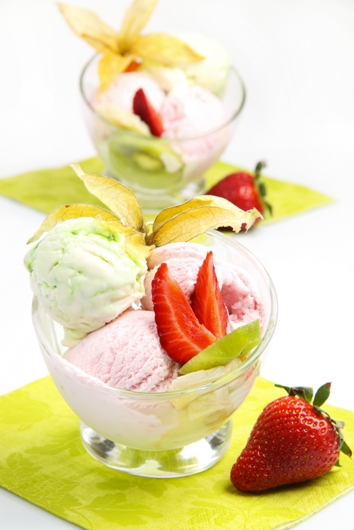
Ice Cream Treats

Triple digit temperatures have hit the Central Atlantic once again, leaving locals and visitors alike to find any way they can to keep the mercury down. Some become shut-ins moving between their air-conditioned homes to their air-conditioned cars to their air-conditioned jobs and back again; some take to the beaches, lakes and pools to swim and soak the heat away; still others turn to cold drinks, ices and of course, ice cream to keep cool.

The origins of ice cream are a convoluted tangle of misinformation and repetition. Alternately the Persians, Chinese, Arabs and Indians are credited with inventing ice cream. This seems to happen because non-dairy puddings and other chilled desserts are treated as synonymous with ice cream – causing a confusion of substance, time and place.

Although the Chinese seem to get the most credit for developing ice cream, the one really important thing bothers me about this version of history is that milk and milk products do not form a large part of the Chinese diet. The Tibetans and of course the Mongolians have lots of dairy in their diets, but the Han Chinese and other ethnic groups do not. Although a modern artisanal cheese industry is today taking root in China and producing Gouda and other western varieties, traditionally, cheese is not something associated with Chinese food. Bean curd-based concoctions, whether fried, or in soup or pudding form, these are often referred to as, “Chinese cheese”. There are only two traditional buffalo milk-based puddings that are sometimes eaten chilled that have any relation to ice cream, namely Jiang Zhuang Nai – the sweet gingery pudding and Shuang Pi Nai – which is a sweetened, cooked custard of milk and egg whites encased between two milk skins.

The pages of Marco Polo’s Travels record a lot of milk being enjoyed as cheese, curds, yogurt, milk, and even a sort of vodka (arkhi) in the Yuan court. So after the 13th Century, milk enters the Chinese diet through the Mongolian-led dynasty. However there is no mention of ice-cream, or anything resembling it.

In the Song Dynasty (960-1279), however, a poem entitled Ode to the Ice Cheese “詠冰酪” was written by the poet Yang Wanli (1127–1206).

It looks so smooth but still has a crisp texture,
It appears congealed and yet it seems to float.
Like jade, it breaks at the bottom of the dish;
As with snow, it melts in the light of the sun.

So it’s still possible that the roots of ice cream in China preceded the rule of the Mongols. But from where did the idea come from? Was it indeed an indigenous Chinese idea, or was it an adaptation of an idea that came from far-away shores?

Although information is hard to come by, a few pieces of information have solid references behind them. Ice harvested in the winter or from ice-covered mountainous regions and then used to increase the storage time of foods has been used in many cultures for millennia. The Persians had yakhchals to keep the ice frozen during the warm seasons and the Chinese and Mesopotamians had icehouses. Documentary sources exist of orders of ice coming from pharaonic Egypt to keep food in the warmest months.

Faloodeh

The first recorded ice-desserts are honey and fruit flavored sorbets offered for sale in Athenian markets in the 5th Century BCE. Both the Persians and the Chinese enjoyed ice or snow flavored with honey and fruit or sugary syrups. For the Persians, sherbet was more of a drink than the frozen dessert we now know by the same name. In the 4th Century BCE, the Persians were enjoying an ancestor of today’s chilled faloodeh pudding made from vermicelli noodles, rosewater, lime juice and a bit of cornstarch for thickening.

The next data point we have is from Pliny, recording Emperor Nero (54 to 68 CE) sending slaves to the mountains to gather snow and ice for as a basis for desserts flavored with berries and nuts. This doesn’t seem to be an advance on what the Greeks were doing five centuries earlier, but rather a simple repetition of a great idea.

So to the first century CE, we have ice and snow-based desserts flavored with fruit, nuts and syrups, in both east and west, chilled drinks on a shaved or crushed ice base in the west, and a rocking, chilled wheat based pudding also in the west. The next innovation that I have come across that walks us a step closer to ice cream is the addition of buffalo milk to the faloodeh. This seems to have occurred in China’s Tang Dynasty (618 to 907 CE) where a frozen concoction of milk, flour and camphor was enjoyed in the royal court.

Interestingly, I’ve seen references (that I cannot confirm) to the Indian use of ice and salt to create an endothermic reaction used to lower the temperature of other substances as early as the 4th Century CE. Also the Arabs are credited with being the first to sweeten ice-desserts with sugar instead of honey or fruit juice. By the 10th Century CE, ice cream was widespread amongst many of the Arab world’s major cities, such as Baghdad, Damascus and Cairo.

Greeks, Persians, Chinese, Arabs, and Indians all can be referenced with developing some part of the process of freezing and flavoring ice, milk or cream to come up with ice cream. Sounds like a Silk Road creation to me – eh? I see ideas flowing around the globe, innovations taking place and being passed on to the next place until a precursor to the modern product emerged.

Today, some amazing innovation in ice cream flavors are coming out of Hong Kong – including: Sichuan pepper and Morello cherry flavored ice cream. Other flavors offered include: black sesame, jasmine tea, pear and port and even gorgonzola ice cream. (Words by Laura Kelley).

A Subcontinental Feast

We had a wonderful dinner party on Saturday night with a selection of Indian subcontinental food. The dinner was to celebrate the announcement of the secret marriage of a couple of friends and to give a former Londoner some of the curry that he so sorely misses. The meal was also a rewarding end to a couple of days of cooking by yours truly. In truth, I’ve been working this dinner for a couple of months. I made the mango pickle a couple of months ago, the vindaloo paste two weeks ago and the chutneys several days ago. Despite all the work, I simply love hearing that the shrimp in spicy tamarind-tomato sauce with hints of mustard and fennel is, “amazing” to one of our guests. Our menu included:

Appetizers
Spicy Cucumber Wedges
Pakistani Bean Salad
Pakistani Riata (Yogurt and Cucumber Dip)
Cashews with Black Pepper
Punjab Snacks

Bread, Condiments and Rice
Naan (plain)
Papad (cumin seed and chili)
Mango Pickle
Tomato Chutney
Cucumber Chutney
Rice with Garlic and Pine Roasted Nuts
Spiced Saffron Rice

Main Dishes
Lamb Vindaloo
Bangladeshi Chicken and Pineapple
Shrimp in Spicy Tomato Sauce
Sweet and Sour Okra
Butternut Squash in Coconut Cream

Desserts
Gulab Jamun
Bengali Rasgulla
Cardamom and Rose Lassi

Chicken and Pineapple Curry

The Pakistani Bean Salad is an all-time winner with its grapeseed oil sweetness blending with chili peppers and white vinegar for a sweet and sour treat, and for the cucumber wedges, I used a garam masala to flavor them instead of ground cumin for a sweet but spicy surprise. The spicy Pakistani Riata, the chutneys and the pickle were also enjoyed with the selection of breads while we waited for the mains to heat up. My favorite of the three is the cucumber chutney with malt vinegar and ginger bringing a great zing to the natual cool of the the cucumbers.

The main dishes were served with two contrasting rices. The mild Pakistani rice with loads of garlic and roasted pinenuts brought a gentle flavor that origninated in the Arab world and traveled to Pakistan along with goods, beliefs and ideals, and the spiced saffron was flavored with cardamom, cinnamon and cloves was well as saffron and sweet butter. For our London friend, I made a proper lamb vindaloo that made him sweat after a few mouthfuls. For his new American wife, who has less of a taste for spice, I made a sweeter Bangladeshi curry of chicken and pineapples. For myself, I prepared one of my favorites: a curry of shrimp in a tamarind tomato sauce with dashes of mustard and licorice-like fennel. The vegetables on the omnivore table were a lovely butternut squash with mustard seeds in sweet coconut cream and a sweet and sour okra served a sides – but they could easily have been enjoyed as part of a series of main dishes on a vegetarian spread.

Our guests were serious Whovians, the desserts – two subcontinental sweets in syrup were an afterthought – eaten in near silence while watching the second “Weeping Angels” episode of the Matt Smith Dr. Who series. We also had good chardonnay and Williamsburg mulled and plain ciders flowing all night

A lovely evening with some happy people. Good food, good friends, a shared interest – a wonderful evening which I am happy for, but still tired from as I look forward to another week of work. Still, these are the moments that sustain us. Leftovers, however, will also sustain both families for some time to come as well! (All recipes from the Silk Road Gourmet Volume 1; Words by Laura Kelley; Photo of Chicken and Pineapple Curry borrowed from Google Images).

The Silk Road and the English Kitchen

A guest post by Chef, Miles Collins:

When Laura kindly offered me her pulpit to eulogise the wonders of the Silk Road I knew at once what I should write about-England. I am English and as an Englishman I owe those ancient traders and travellers of the Silk Road a huge debt of gratitude. For as much as Laura’s writings of soups and stews from Azerbaijan to Pakistan seem a million miles from the green and pleasant pastures of an English countryside it is our penchant for spice which binds us in a way most of my fellow country folk are blissfully ignorant of.

Elizabeth David

Laura’s investigative prowess has shone through in her book and on this blog and has taught us that herbs and spices have played an integral part of all of our history since the earliest civilisations.

So what of the Silk Road’s influence on English food? For that I turn to the Queen of English cookery writing, Elizabeth David. For it is Ms David who, for me bridges that gap in food terms between the days of the British Empire and the multi- cultural Britain we see today. It is in her wonderful book Spices, Salt and Aromatics in the English Kitchen, first published in 1970 that you are reminded of the importance of spice in English cookery.

The book is littered with references to nutmeg, cinnamon, cumin, pepper, mace and mustard among many others and, quite rightly dispels the commonly held English misconception that these flavours are unique to England. I must point out that this is not based on some form of old colonial arrogance, far from it. It stems from the dishes the English have known and loved since their earliest childhood memories; cinnamon toast, custard tarts flecked with nutmeg, kedgeree, boiled mutton with mustard sauce, Christmas pudding, boiled sweets with aniseed, the list goes on. You see, spice has been embedded in our food culture in a quiet, unassuming way for so long that we have made it our own in our typically quiet and unassuming way.

Chicken Tikka Masala

Perhaps it is because our use of spice tends to be less liberal than that of other cuisines that we don’t notice it so much. With the exception of our fiery ‘English’ mustard much of our use of spice can be found in baked form such as puddings, breads, tarts and pies which is why, I suppose that a fresh grating of nutmeg always reminds me of home and childhood desserts.

References to curry can be found in our history books as far back as the 16th century but it wasn’t until the Victorian era and more especially the First World War when the notion of using curry spices to mask the flavour of meat such as mutton really took hold in people’s homes.

Fast forward from David’s heyday in the fifties and sixties to modern day Britain and our national favourite as voted by the British public; the chicken tikka masala. Much was made of this revelation a couple of years ago, it was, apparently a sign of our changing culture and a new found love of spice. I am not sure which is the more delicious, the masala or the irony. (Words by Miles Collins; Photo of Elizabeth David borrowed from The Daily Mail; Photo of Chicken Tikka Masala by monkeybusinessimages@Dreamstime.com)

Shizi, Singh, Gangs Sengemo – A Lion by Any Other Name . .

Skilled dancers from Xiiang,
Persian masks and lion masks.
The heads are carved of wood,
The tails are woven with thread.
Pupils are flecked with gold
And teeth capped with silver.
They wave fur costumes
And flap their ears
As if from across the drifting sands
Ten thousand miles away…

- Bo Juyi, 9th Century

With Chinese New Year, rapidly approaching, a post about the endangered Asiatic Lion seemed like a good idea. The Chinese along with many other Eastern and Southeastern Asian cultures usher the New Year in with a lion dance to banish evil spirits and sorcery and allow good fortune and joy to reign. Not native to China, common knowledge is that lions and their symbolism probably came east to China from India with the spread of Buddhism by the first century of the Common Era along the Silk Road (Some accounts call for the adoption of Buddhism in China to be in the first century or two BCE). Lions were quickly revered and incorporated into Chinese culture as symbols of majesty and power. Whether real or imagined, lions were believed to protect people against evil spirits by chasing them away and were conjured in protection rituals and carved in stone to be sentinel temple and palace guards.

Lions Guarding Palace - Nepal

There were, however, many opportunities for contact between Chinese traders and soldiers and peoples from lion-inhabited lands along the Silk Road. Bo’s poem, however, speaks of a lion dance that took place eight centuries later, in the T’ang Dynasty in what was then a western frontier region, Liangzhou, in which the dancers wore Persian masks. Since the Persian Achaemenid Empire reached as far east as Tajikistan by 500 BCE, it is not out of the question that the Chinese knew about Asiatic lions sooner than the first century CE, but perhaps their adoption of Buddhism gave greater zeal to the symbolism of the lion.

Guard Lion - Closeup

China is not alone in is reverence for lions, many Asian countries incorporate its symbolism into their myths, folklore and art. In Tibet, the snow lion is an imaginary beast that is said to represent unconditional cheerfulness, a mind free of doubt that is clear and precise. It has a beauty and dignity resulting from a body and mind that are synchronized, and a youthful, vibrant energy of goodness and a natural sense of delight. The snow lioness also is said to have a special milk which heals both physical and spiritual ills.

Lions are so honored in South Asia as to be symbol of India herself and are often used in depictions of Bharat Mata or Mother India.

The Lion Capital of India with its three lions placed with their backs together, facing outwards was first erected in 250 BCE by Emperor Ashoka has also become a national symbol for the country. Singh is also an ancient Vedic name meaning lion that dates back thousands of years. Narashima or Narasingha is also the half-man, half-lion incarnation of Vishnu and is held sacred by all Hindus. In Sri Lanka, the lion represents the ethnic Sinhalese – or people with lion blood – and a sword wielding lion is the central symbol on the country’s flag.

Lion Symbolism - India

In considering bravery and fearlessness as two important aspects of the lion symbolism, whether Asian or African, I am reminded of a story once told to me by a former colleague. It is about his own adventures in Central Africa as an American epidemiologist. His research group was camped not far from a native village whose population part of an ongoing study. One night, he heard the usually peaceful village in an uproar. He heard lots of yelling and screaming going on, lots of drumming and other noise making. Not sure what was going on, whether it was a festival or trouble, he made his way towards the village alone. By the time he reached the village, it had grown quiet again and no one was about, so he left and went back to camp. He queried the village headman the next day about the cause of the noise and was met with disbelief that he was still alive. It seems that a lioness had made her way into the village and the noise was made to scare her off. She ran off through the trees in the direction of the path that he was walking. The headman made some consultation with other men of the village and then the good doctor was given a bracelet of lion claws – because he must have been a man beloved by lions.

Back in Europe, at the Pergamon, I’ve walked through the Ishtar Gates of Babylon and down the heavenly cobalt blue and turquoise path strewn with golden sunflowers and lions. Built by Nebuchadnezzar II around 575 BCE, it is one of the wonders of the ancient world that I am grateful for having experienced.

Ishtar Lion

Reverence and symbolism aside, the last wild lion was seen in Western Asia in mid-20th Century Iran. How can we as a species value the idea of a lion and the symbolism we have assigned to it so highly and care so little for it in the world? Once roaming freely from Eastern Mediterranean Europe across Western Asia and North Africa and into Central India and the Northern Levant, less than a few hundred Asiatic lions remain in the wild, most living on the Gir Forest Reserve in Gujrat, India. Worse than these dangerously low numbers is that the exisiting wild lions are descended from an even smaller population that survived to the early 20th Century and are thus so closely related that they do not form a natural, healthy population. Now critically endangered, the lion has become mired in internal Indian politics between factions who wish to create separate populations of the animals outside Gujrat in the Indian state of Madhya Pradesh and Gujrati’s who don’t wish to lose the designate of the last refuge of the Asiatic lion. Gene pools, zoos and captive breeding seem like the only hope for Asia’s last lions as habitat destruction, poaching, pressure from encroaching human villages in Gujrat and lack of genetic diversity continue to wear away its tenuous hold on existence.

So if you see a lion dance during the coming Spring Festival, and if they banish the evil spirits that afflict you and bring you gifts of oranges and good fortune, remember that your children may be telling their children about how lions – like the ones in Africa – once roamed Asia. (Words and photos of Nepalese Lions by Laura Kelley; illustration of Bharat Mata and Photo of the Ishtar Lions from Wikimedia Commons. Click here for more information about Asiatic Lions.)