Culinary History Mystery # 5: A Loaf of Leavened Mesopotamian Bread

Something wonderful and unexpected happened yesterday. After a long day of tromping around historical archaeology sites in St. Mary’s City with the family, I arrived home to find a long-expected, but immediately unanticipated e-mail from a fellow food lover in England. Cid is a purveyor of fine foods and an expert breadmaker. Some time ago, I asked her to help me solve a historical food puzzle that has been vexing me for some time. Namely, did the Mesopotamians enjoy leavened as well as unleavened bread?

Because we are lacking explicit evidence for the use of yeast to leaven bread in Mesopotamia and many other ancient cultures, modern cooks reconstructing the cuisines of these cultures have assumed that all of the bread in these cultures was flat and dense like hardtack. An unfortunate assumption.

What Cid has beautifully demonstrated is that spelt, which is not too dissimilar to the emmer wheat used by Mesopotamians, makes a great big loaf of sourdough bread using a starter based only on wild yeast from the environment.

For those of you new to the “starter” concept, it is simply that a grain providing a carbohydrate source is mixed with water and allowed to attract microorganisms from the environment.  As the microorganisms consume the food given them by the flour (carbohydrate and sugar) they reproduce and must be “fed” with the addition of new flour (and sometimes water).  Sometimes an additional sugar source is added by soaking macerated fruit in the water to be mixed with the flour to start the starter culture more rapidly.  This process continues until a stable community of yeast and bacteria is established in the liquid or semi-solid “starter”.  This starter is added to flour, water and other ingredients, kneaded, folded, proofed and baked and sourdough bread results.

The importance of Cid’s demonstration is that even if the ancients didin’t explicitly know and write about yeast as an ingredient, they might have known how to use the wild type organism.  Cid’s talents as a baker show that wild-yeast leavened breads were possible in the ancient world.  She writes:

“For the past few weeks I’ve been feeding a spelt ferment starter with organic spelt flour every day. Next to my other ‘white’ ferments the spelt had a different smell and didn’t bubble up as quickly.

Wild Yeast Spelt Starter

It’s not clear whether the ancient bakers used a ‘poolish’ method for their bread, which is basically an amount of starter ferment mixed with water and flour left to further ferment over night before adding more flour the next day. It seemed like a reasonable idea so that’s what I did. It bubbled well enough to make me believe it would produce a good loaf. So at breakfast the following day I mixed in enough spelt flour and two teaspoons of salt and about a tablespoon of olive oil.

The feel of the dough was very different to the normal sourdoughs I make on a weekly basis. Despite kneading and resting, the dough never felt elastic and rose only slightly. You see, the gluten in modern wheat flour produces stretchy dough that rises well and if ‘folded’ at regular intervals rather than kneaded, will give the crumb its familiar large holes and crackling crust.

Unbaked Spelt Sourdough

As I got the dough properly formed up into a loaf, I fired up my oven to 240°C with baking stone in place.

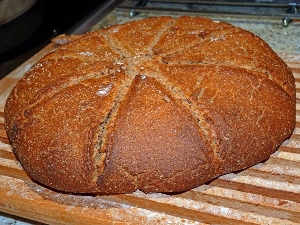
As you can see the baked loaf is rather flat and dark looking. It’s consistency is much more like a scone than modern day brown bread and it has a sour tang. The texture is too heavy for my taste and the ferment too sour. A portion of this type of bread would be very filling and full of natural fibre.

A lighter texture could possibly have been achieved by mixing the spelt with other grains known to Mesopotamians, such as rye, oats or the numerous wild grasses they incorporated into their diets. Sieving the milled grain would have given a whiter, presumably lighter weight end result as well.”

Wild Yeast Spelt Loaf

Wonderful work, Cid! Your demonstration is not only proof of concept that these ancients could have enjoyed leavened wild-yeast sourdough breads, but it is also significant for understanding ancient beermaking and winemaking as well. Many of the people and companies who have tried to reconstruct these recipes have been left wondering how to ferment the grain and malt mixtures that have been described on the ancient tablets. Your wild yeast spelt starter gives them an excellent way to introduce yeast into the alcohol mixture. The ancients may not have known what yeast was, but I’m betting they knew how to cultivate and use it for bread and alcohol production. (To beer makers out there – lets talk about that aromatic “wort” a bit – I may have some ideas on that score as well.)

Another thing that is important to the flavor of bread, beer and wine is that wild yeast starters are complex cultures of local yeasts not the uniform commercial cultures of Sacccharomyces cerviseae one can buy in the market. Additionally, these starters all have complex communities of local bacteria in them. The difference between species and community diversity in commercial versus wild starters affects proofing time, texture and flavor of the products made.

If any of you start experimenting with spelt (or farro which is emmer wheat used by the Mesopotamians), I suggest you consider flavoring your loaves with spices to balance the strong flavor of the spelt or farro. Some spices that are authentic to Mesopotamian bread can be found in the Ninda-gal recipe (JCS Vol. 29, No. 3) are onion seeds, sumac and saffron. You could also troll some of the Mesopotamian recipes on Silk Road Gourmet for some other spice combinations as well. (Words by Laura Kelley and Cid, and Photographs of Wild Yeast Spelt Starter, Unbaked Sourdough and Leavened Spelt Loaf by Cid).

Umami in a Bottle: Homemade Garum

Homemade Garum

Here it is, the real deal! Amber-colored culinary gold! The first results from last summer’s backyard garum making!  As some of you may remember, back in June of last year I started making garum in my backyard with fresh mackerel and lots of sea salt.  I also wrote the “garum diaries” until mid-September which described the first 90 days or so of the initial enzymatic digestion of the fish.  I noted the surprising lack of odor despite the process of digestion and blow by blow described the changes in color and consistency in the garum-making vessel.

For the uninitiated, garum is the substance that was produced by the Carthaginians (and likely before by the same people in the Phoenician homelands of the Eastern Mediterranean) It was made from fish and salt and used to add a savory flavor to many foods that was otherwise lacking.  it was used on everything from meat and vegetables to desserts and wine depending on how it was prepared and mixed.  The Romans took over the lucrative garum production facilities from Carthage after conquest, and much of what we now about garum production comes from them.

Basket of Fish for Garum Making

I’ve learned a lot over the months and frankly found that a great deal of what is available on the internet on the production of garum is packed with contradictions.  Part of this is because scholarly work on garum is still in progress and people who study this issue for a living are still making up their minds about what garum is and isnt.

The most recent understanding of the terminology (provided to me by Sally Grainger) is that:  Liquamen refers to the whole-fish sauce made with all the viscera intact and sometimes extra viscera [presumably to speed the digestion process].  The enzymes in the viscera dissolve the fish into a thick sauce which yields a translucent, highly nutritious sauce when it is filtered or diluted.  It can be gathered by skimming the top of the ferment, or by letting it drip out of the paste that has been put in a colander.  It is extremely fishy, oily, and salty and packs a wallop of flavor.   Allec is the solid paste that is left after the liquamen is removed.  The Romans would pick this clean of bones, skin, fins and other fishy solids and use it as a paste on bread or as a condiment.  Given the taste of the allec I produced, I think it would have probably been mixed with olive oil, butter or animal fat to make it more palatable.  By personal choice, I would use butter.  I think then it would taste like country caviar – fresh sweet butter on a hunk of brown bread spread with fresh caviar – or allec. The Romans, however, might have used olive oil.

Muria is the sauce made when the fish are gutted and headed and the liquor that emerges is weak in protein and pale in colour. This probably corresponds best with the modern colatura di alici.  Lastly, there is haimation which is the liquid that is produced from just from blood and viscera.  This is garon haimation in Greek and garum or garum sociorum in Latin. It is black and bloody according to Galen.  .

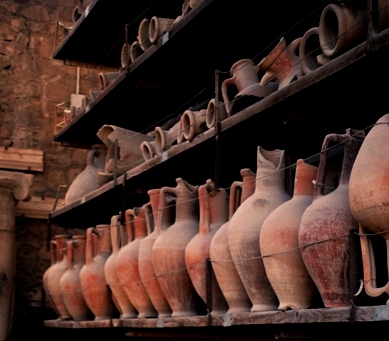
Garum amphora

Another thing that my experience making garum taught me that varied from much of the historical information available was the quantity of garum produced and the speed at which it can be harvested.  Many of the early writings about garum speak of a basket being dipped into the ferment and the garum flowing into the basket.  Or if a barrel or container were used, directions are to puncture the barrel near the base and let the garum flow off.  This may be true for large-scale production such as those in vats, but it is not true for the casual backyard producer of garum.  With 15 pounds of mackerel and almost nine pounds of salt to start, nothing flows or gushes, it is harvested drip by excruciating drip and then filtered multiple times at the same glacial rate.  It takes patience and persistence – but it is worth it.

The slow speed of my garum harvest may be because of the rather high quantity of salt to fish I wound up using as well.  Its difficult to say with n=1 production experience.

After having produced garum, I am convinced that the few so-called quick recipes for “garum” in the ether cannot possibly produce the product that took nine months to create in my backyard.  These recipes call for the fish and salt to be cooked on the stove top or in a yogurt maker.  I’m not sure what these recipes produce – I suspect it is ordinary fish oil – but do I know that a few hours of heat cannot replace nine months of digestion. Because these authors describe the taste as, “not very fishy”, I know it cannot be garum.  The garum produced by digestion is fishy, salty, and quite oily and only a few drops (vice teaspoons or tablespoons) would be needed to flavor a dish. Even if adapted from historical (usually Byzantine) sources, these quick recipes produce a product that looks like garum, but doesn’t taste like it.  You can’t rush perfection.

Although the production of garum is not smelly, harvesting garum can be, unless steps are taken to minimize the smell.  You must cover containers that are used to harvest and filter the garum, wear old clothes and be prepared to do lots of dishes.  For the sensitive, I suggest surgical gloves – the odor permeates everything and is very hard to get rid of.  Lastly if you share your home with four-legged creatures, you will want to put them out or at least keep them away from the garum – they will be curious, and noisy.

So, what does it look like?  Interestingly, my garum is roughly the same color as its last living relative in the west – colatura di alici – the modern Italian fish sauce made from anchovies.  The garum is a bit more amber in color (as opposed to the colatura’s reddish brown color) even after five filtrations, but the color is much more similar than that of nuoc mam which comes in a variety of shades of dark brown.  The garum is also a bit more viscous than either of the two modern sauces – possibly due to the introduction of water in the modern production process, or possibly due to the different species of fish used.  If you are curious about the possible west-to-east flow of fish-sauce production technology in the ancient world, please see this essay.

So, what does it taste like?  It is saltier, way more fishy and a bit oiler than either the colatura di alici or the nuoc mam.  Garum from mackerel is more powerful as it hits the tongue, has a longer crest of flavor and remains stronger for a longer period of time as it fades. One can taste it in more places in the mouth than the colatura or nuoc mam as well. No matter where you place the garum – the flavor explodes in your mouth.  There is also a slight bitterness to the garum that is absent from the colatura or the nuoc mam.  Interestingly, the nuoc mam has fructose and hydrolyzed vegetable protein listed as ingredients.  These certainly affect the flavor of the sauce – especially the fructose. In short, the colatura and the nuoc mam taste more like each other than like the garum.  The nuoc mam has a more complex flavor than the colatura, but since both are made from anchovies, that probably is because of the added ingredients listed above.  The colatura claims only anchovies and salt as ingredients.  Garum is, without a doubt, umami in a bottle.

__________

Glutamic Acid Formula

A word about umami.  Most of us were raised on the ancient Greek notion of four tastes: sweet, salty, sour and bitter.  I vividly remember “mapping” these tastes on our tongues in elementary school but placing different substances on different areas of the tongue with a cotton swab.  A combination of modern science and some talented tongues have turned this notion on its head, and research conducted largely in the 20th Century has explained umami for us.  Sort of like a sixth sense, umami is the “fifth taste” and represents savoriness. It is carried in a number of molecules – most notably in glutamic acid that most of us experience in the form of sodium glutamate.  Many foods are rich in glutamic acid – notably ripe tomatoes, celery, cheese, asparagus, meat, fish, and shellfish etc.  Of course, cooks and chefs have been combining these ingredients for years to create savory dishes.  Most notably the renowned western chef Escoffier used an instinctive knowledge of these ingredients for many of his dishes.

Kombu (kelp)

Kikunae Ikeda, the Japanese chemist who “discovered” umami worked with kombu a type of seaweed that Japanese cuisine uses in many dishes either as a vegetable or dried and dissolved in broth form with bonito fish flakes as dashi.  Ikeda coined the word “umami” from the Japanese “umai” which means delicious, nice or palatable as well as brothy, meaty or savory.  Both sets of meanings, as you can see, represent important aspects of umami taste perception.

What I find fascinating about umami is how little we truly understand it.  We know it has a flavor of its own – which changes depending how the molecule of glutamic acid is charged - but we suspect that it also changes other flavors to enhance them in a synergistic way.  Additionally, it also add a “mouthfullness” to food that adds to the positive perception of food flavor in the mouth.

__________

Getting back to production, we digested the mackerel in salt in the backyard for nine months.  In the initial stages, we stirred the batch at least once a week, but as the fall and winter passed, the stirring decreased to only a couple of times a month.  To harvest the garum, first skim off any that rests on the top of the vat.  I did this with a teaspoon with the same technique as which I use to clarify butter or remove excess fat from the top of a stew or curry.

Next, fill a small colander with ferment pick out the large solids like bones and fins etc.  Wipe the outside surface of the colander and place above a receiving vessel.  Cover the colander with a plate to reduce odor and set in a place where it will not be disturbed.  I suggest placing in a garage or cellar, if left out of doors, local animals will easily remove the plate and make a mess of the ferment.

Every day a little more liquamen will drip out of the ferment.  Collect this and set aside.  There is no need to refrigerate – garum is so salty it will keep at room temperature nearly indefinitely.  However, it may be better to harvest and filter only what you need for short-term purposes as the biochemistry of the liquamen may change over time after it is exposed to light (which is why the Romans stored it in opaque amphorae.

Next comes the filtration.  The first filtration I did with commercial grade cheesecloth that was folded over into four layers.  This will remove the crude solids.  Then I switched to a funnel and commercial coffee filter and filtered the mixture four more times, each time after a period of rest to allow the solids to collect on the surface of the garum.

A word about garum being “clear”.  On the internet, the quick recipes for “garum” all mention that the product should be “clear”.  This concern is based on the concept of turbidity and is a caution against growing microorganisms instead of facilitating the enzymatic digestion of fish.  With the quick production method, this may be an issue, but it is not if you go about it over a series of months.  Garum isn’t clear and will never be clear with manual filtration.  Even after four passes with coffee filters, if the garum is allowed to sit, a thin layer of scum forms on the top of it.  If this is disturbed, the whole solution will become cloudy, only to settle out when left to rest for several hours or overnight.  The best that garum will ever be is a beautifully translucent amber.  Greater clarity could be achieved with a centrifuge, but that is out of reach for most people, and certainly never occurred to the Carthaginians, Greeks or Romans.

Where do we go from here?  We keep on harvesting the garum.  First by letting the liquid drip out of the raw ferment and then by performing dilutions with water of the allec that remains from the first harvest.  Then comes the fun part.  We start making the various mixtures that have been handed down to us from the Romans – using sweet and dry wine must, water, honey and olive oil and a variety of different spices.  Then, well then, comes the cooking.  So stay tuned.  There will be much more to learn about garum in coming months.  (Words by Laura Kelley; Photo of Homemade Garum by Laura Kelley; Other images from Wikimedia).

——–

Additional:  I will be hosting an ancient Roman cookoff during the month of April to explore the many uses of garum.  In this effort, I will be joined by Charles Perry, Ken Albala, Sally Grainger, Napa winemaker David Mahaffey, Roman Restaranteur Paolo Magnanimi and the lovely polymath, Deana Sidney from Lost Past Remembered.

Amphorae for Sage, Rosemary and Thyme – Not Wine!

Greek Amphora – 3rd Century BCE

With the help of DNA analysis, scientists are getting a present-day look at centuries-old trade in the Mediterranean. Such studies may help debunk some long-held assumptions, namely that the bulk of Greek commerce revolved around wine.

During the fifth through third centuries B.C., the Mediterranean and Black seas were major thoroughfares for ships loaded with thousands of amphorae, thought from their shape to contain wine. But only recently have researchers peered through the lens of 21st century genetics to identify the actual remnants of the jars’ long-disappeared cargo.

Analyses of DNA fragments from the interior of nine jars from Mediterranean shipwrecks now reveal various combinations of olive, grape, Lamiaceae herbs (mint, rosemary, thyme, oregano, sage), juniper, and terebinth/mastic (genus Pistacia). General DNA targeting analyses also reveal the presence of pine (Pinus), and DNA from Fabaceae (Legume family); Zingiberaceae (Ginger family); and Juglandaceae (Walnut family).

The findings, reported in an upcoming Journal of Archaeological Science (Volume 39, Issue 2, February 2012, Pages 389-398), suggest that the ancient Greeks produced and traded a wide range of foods. The economy of the time was much more sophisticated than previously thought, says Brendan Foley, an archaeologist at Woods Hole Oceanographic Institution, who coauthored the work with biologist Maria Hansson of Lund University in Sweden and colleagues at the Hellenic Ministry of Culture and Tourism.  Some samples already await analysis and further studies are planned.

With this new information, scientists could reconstruct a more accurate picture of the crops being grown and the products changing hands when the world’s first complex economies were getting under way, possibly gaining clues to the agriculture, technologies, art and geopolitics that played into daily life. (Words by Laura kelley; Photo borrowed from Ancienttouch.com)

Cookoff Challenge #1 – Ancient Mesopotamian Cuisine

Calling all historians, linguists, anthropologists, foodies and anyone curious about the food of the Ancient Near East!  Come to the Ancient Mesopotamian Cuisine Cookoff Challenge!  Think of it like Iron Chef – Mesopotamian Style!  But instead of a theme ingredient, you have a list of ingredients without amounts or directions attached to them.  The only thing between you and a finished dish is your own culinary creativity.

There are two goals to the challenge: 1). Create dishes that could have been eaten in the ancient Near East or, 2.) create dishes for today that are inspired by ancient dishes.

Since amounts and specific types of ingredients are not specified, all but the mersu recipe (recipe 1) could produce soups, stews, braised dishes or roasts or other manner of culinary creation – you decide.

Based on the lists of ingredients posted below, which derive from the Yale Babylonian Culinary Tablets or from a couple of other sources, make a dish, photograph and describe it and give us the recipe and directions you used to create your dish.  The challenge runs from August 1st through September 30th and is open to any cook, amateur or professional who wants to try their hand at interpreting ancient food.  I will post all complete entries with full credit to the authors and cooks on a rolling basis. Multiple entries across the two month period are allowed and encouraged.

If you have questions about ingredients or recipes, please e-mail me at laurakelley AT silkroadgourmet DOT com.

Additions to recipes are allowed, but ought to be common ingredients – like salt or honey, or items that might have been available in the ancient Near East.  It is fine and encouraged to draw connections between ancient food and the food of related modern cuisines.  Please keep additions to the recipes to a minimum (not more than 4 or 5, less if possible).

The directions or methods for recipes are usually brief or absent in most Mesopotamian recipes, so feel free to improvise.

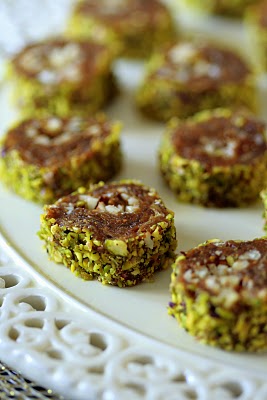
Recipe 1.  Mersu: ingredients – dates and pistachio nuts.  See this post for ideas or let your creativity run wild. Update: Additional ingredients from other “recipes” from Nippur to be used in a mix-and-match fashion include flour (nut, wheat or other) figs, raisins, minced apples, minced garlic, oil or butter, cheese (soft or hard), and wine (must syrup or pomace)

Recipe 2. Meat with Wild Licorice: ingredients – wild licorice (Glycyrrhiza glabra), asafoetida, garden cress (but possibly watercress), cumin, zest of citron, and water.  The recipe states to boil six liters of water with wild licorice and cook for a long time. Then it reads that the citron zest should be added and cooked until it is reduced to 1 liter. Then the liquid is strained and meat is added and cooked. (Notes 1 & 2)

Recipe 3. (Yale Babylonian Collection (YBC) 4464 – recipe XIX). Meat with Carob: Ingredients and method – Prepare water with fat, salt, shallots and semolina.  Mash garlic and leeks with yogurt or sour cream. Crush carob seeds.  Assemble ingredients in a pot. (Notes 3 – 5).

Recipe 4. (YBC 4464 – recipe XX). Mutton with Wild Licorice and Juniper: Ingredients and methods – Prepare water, fat and licorice root.  Add salt, juniper berries, shallots, semolina, cumin and coriander.  Mash the garlic and leeks with yogurt or sour cream. (Note 3)

Recipe 5. (YBC 4464 – recipe XXII). Lamb with Rye or Wheatberries: Ingredients and method – Prepare water and fat. Add salt, beer, shallots, arugula, coriander, semolina, cumin and cracked rye or wheatberries. Add mashed leeks and garlic. Finish with coriander and carrot or parsnip. (Note 6).

Recipe 6. (YBC 4464 – recipe XXIII). Lamb with Wheat (Couscous) and Mint: Ingredients and method:  Prepare water, add fat and couscous. Add semolina, coriander, cumin and yogurt or sour cream.  Assemble in the cooking vessel and sprinkle with crushed garlic.  Then blend in carrots or parsnips and mint.

Recipe 7. (YBC 4464 – recipe XXV). Turnips (or Roasted Barley) with herbs Ingredients and method: Prepare water, add fat, turnips (or roasted barley). Add a chopped mix of shallots, arugula, and coriander that have been mixed with semolina or other flour and moistened with blood. Cook until done. Add mashed leeks and garlic. (Notes 7-8)

Recipe 8. (YBC 8958 – recipe 1) Wild-Fowl Pie: Ingredients and method: Wild-fowl,
water, milk, salt fat, cinnamon, mustard greens, shallots, semolina, leeks, garlic, rye flour (or a mix), brine, roasted dill seeds, mint, wild tulip bulbs. (Method is for a store-bought bird. If a whole fresh or wild bird is used, see notes.) Salt birds inside and out and place in pot where water and milk has been warmed. When it comes to a boil add a mash of shallots, semolina, leeks, garlic and enough water to moisten the mash. Cook until the meat is soft enough to easily debone. When meat is done, remove from pot and let cool enough to handle. Lightly pan or oven roast some dill seeds. When done, remove from flame and set aside.

As bird is cooking, soak rye flour in enough milk to moisten and form into a ball. After the flour is formed into a ball, add some brine and knead dough until pliant. Divide dough in two and add roasted dill seed to one half and set aside. Take the part without the dill seed and form a lower crust that is several inches larger than the plate. Oil a pie plate or shallow casserole dish and line it with the lower crust. Add a layer of mint leaves.

Tear or shred meat from bones and add it over the layer of mint, mounding it towards the center. Add more mashed leek, garlic and wild tulip in a layer over the fowl. Add some more mint and roasted dill seed. Use top crust to cover meat and greens and seal tightly. (There are no instructions to prick the top crust, but I might do this). Butter or oil the top crust and cook in oven till done. Serve with bowls of broth the wild fowl cooked in. (Notes 9-12)

Recipe 9: (YBC 8958 – recipe 2) Pigeon with Herbs. Ingredients and method: Pigeon, salt, water, fat, vinegar, semolina, leek, garlic, shallots, tulip bulb, yogurt or sour cream (see note 3), and “greens”. (Method is for a store-bought bird. If a whole fresh or wild bird is used, see note 6.) Salt the birds inside and out and place in a pot where water has been warmed along with some fat. Pound together leek, garlic, shallots, tulip bulb, semolina and yogurt or sour cream and as the water cooks down, add the pounded mixture to the pot.

When the bird is nearly cooked, remove from the pot and set aside.  When it is cool enough to touch outside and in, brush or sprinkle more vinegar on the bird, then rub it with garlic and greens.  Roast the bird over a very hot flame until done.  Carve birds and serve with sauce from the pot. (Notes 13 & 14)

Recipe 10: (YBC 8958 – recipe 7) Francolin Pot-Pie  Ingredients and method: Francolin or other wild fowl, vinegar, salt, mint, water, fat, cinnamon soaked in beer, mustard leaves, shallots, leeks, garlic, semolina, lightly drained yogurt or sour cream (see Note 3), rye flour, brine (optional ingredient to mix with the flour include ground pistachios) butter, kishk, beer (used to soak cinnamon from above), and honey (Method is for a store-bought bird. If a whole fresh or wild bird is used, see note 6.)  Sprinkle or brush the fowl liberally with vinegar. Then rub thoroughly inside and out with mixture of chopped mint and salt. Heat water in a pot and add salt and vinegar.  After it heats, add cinnamon and mustard leaves and prepared fowl. Cook until fowl is soft enough to be deboned easily.  Pound together the shallots, leeks, garlic semolina and lightly drained yogurt or sour cream.  As water cooks down, add the pounded vegetable and yogurt mixture.

As the francolin cooks, moisten the rye flour (and pistachios if using) with water and after it comes together into a ball add a little brine and knead until pliant.  Divide dough into two pieces. Make a thin layer of one piece of dough and line a bowl (asallu) with  it.  Bake in the oven until the dough bowl is cooked.  Shred meat from the bones of the francolin and set aside.

Mix kishk and beer that cinnamon had been soaked in.  Add francolin meat and leeks and garlic and mix well. Pour into the baked-dough bowl (still lining asallu). Top with butter and honey.  Make thin top crust and seal.  Cook in oven until done. (Notes 15 – 17)

Recipe 11: (JCS Vol. 29, No. 3): Ninda-gal, Bread with Onion Seeds, Sumac and Saffron:
Ingredients and method: Spelt flour; semolina, a coarse mixture of onion seeds, sumac and saffron and salt. No directions for water or milk are included, but obviously moisture is needed. Many different shapes of bread are possible.  If it were a flatbread, it could be a large, injera-type bread on which other food items are placed. Sigrist does specify that it is a “large bread”. Alternatively, it could be a cured sourdough, allowed to rise, akin to a large modern loaf.  (Notes 18 & 19)

__________

Regular visitors to this site know that I disagree with many of the published translations and analyses of the food represented in the culinary tablets and have done some research on the issue myself to suggest alternatives to the endless lists of broth and onion dishes offered by langauge scholars (like Bottero) and their derivatives (like Kaufman and others).

For those of you new to this blog, a post on the two recipes known before the Yale Babylonian Tablets (mersu and “court boullion”) can be found here, and a more recent one looking at a few of the Yale recipes can be found over on the beautiful site, Lost Past Remembered.  A growing lexicon of words that either fill in the gaps left in the translations, or, I believe correct some of the linguistic and culinary errors made by earlier authors can be found here.

This challenge will be a lot of fun if a whole bunch of different types of people participate.  If I get time, I’ll post a few more recipes with my interpretations included - so stay tuned, warm up the stove and get the pans out for this cookoff challenge. (Words by Laura Kelley).

Notes

1.) A word about “meat”.  The Mesopotamians had all manner of domesticated and wild meat available to them.  Sheep and goats were consumed when older and their fat harvested, but they were primarily used as milk producers when young.  Other meat came from cattle, bison and oxen as well as from wild game. Wild and domesticated and fowl and fish of many sorts were also enjoyed.  The form or cut of meat is usually not specified in most recipes so, you decide whether it is a roast, a stew, a soup or a braised shank etc.

2.) The zest of citron is the best possibility for the ingredient ukus-hab. It makes descriptive, culinary, cultural and geographical sense and isn’t poisonous like the colocynth or too easily overwhelmed like cucumber – both of which were suggested by Bottero.  It is possible that it is colocynth seed – which is still commonly used in African foods today and is related to the watermelon seed enjoyed in Levantine cuisines.

3.) When yogurt or sour cream is used, it is lightly drained to remove excess water and concentrate the sour flavor of the yogurt – like an Afghan chaka.  One way to drain the yogurt is to filter it though a clean drip-type coffee filter (not an automatic coffee maker).

4.) The type of fat is unspecified but could be rendered animal fat, butter or any number of oils.  When cooking a Lamb and Carob Stew based on Recipe 3, for example I used a light sesame oil called gingelly now commonly used in Indian cuisine.  I like gingelly because of its high burn point, so its good for browning and braising dishes, and because it was known to Mesopotamians as well.

5.) The manner of semolina is not specified, but I used couscous in the Lamb and Carob Stew, and I cooked mine (soaked/steamed) separately.  Feel free to experiment with the type used and the manner or preparation.

6.) Yogurt or sour cream are not listed in this recipe, but are usually mashed with leeks and garlic. Try it with or without.

7.) There are two accepted meanings for laptu – either turnip as Bottero chose or roasted barley – depending upon the context. I wanted to bring the possibility of roasted barley into play because the dish could either be a vegetable or a barley pilaf, depending on which meaning of laptu one chose. I think it might be an interesting recipe with a wide variety of root vegetables known at the time.

8.) I don’t expect the amount of blood used to be very large. Many, modern cultures add the blood of a just slaughtered animal into a dish for “flavor”. it should be just enough to moisten the herbs and flour. Ancient Mesopotamians were omnivores, not vampires.

9.) If a fresh, whole fowl is used, it is plucked and singed. The head and feet are discarded. The innards (gizzard, intestines) are washed well, then cooked in a pot of water to further clean them. Then they are rinsed in cold water until fully clean. Once clean, these can be added to the pie for flavor.

10.) The type of wild fowl is not specified. Anything from quail to pigeon to game hen or anything in between would work. The recipe does specify that the birds are “small”.

11.) Cinnamon is a best choice for “aromatic bark”. Although native to Sri Lanka, it would have been known to the Mesopotamians through contact with Egypt which was major consumer of the spice. I will be continuing to do research on this to see if there are other alternatives, but for now, cinnamon is the best choice.

12.) Bottero called this ingredient “rue” which makes a little culinary sense, but when you research all the uses for sibburattu, mustard is a better fit. It lends a peppery flavor, it can be used to treat the ailments specified and its seed is also used in cooking. Rue seeds are generally not good for you and are mildly hallucinogenic. See lexicon form more info.

13.) The type of bird is specified as an amursanu-pigeon, but any fowl will do nicely.

14.) The type of greens is not specified, so you can experiment.  I might try, cilantro, mint, sage etc. Pick herb flavors that will complement not struggle against the other flavors in the dish.

15.) The recipe specifies a francolin, which now persist only in Africa.  I’ve seen quite a few of them in South Africa and they range in size from a pheasant to a female turkey.  A medium-size wild fowl of any type will do.

16.) Kishk is a powdery cereal of bulgur (cracked wheat) fermented with milk and (yoghurt). Milk, yogurt and bulgur are mixed well together and allowed to ferment for nine days. Each morning the mixture is thoroughly kneaded with the hands. When fermentation is complete the kishk is spread on a clean cloth to dry. Finally it is rubbed well between the hands until it is reduced to a powder and then stored in a dry place.  Kishk is commonly used throughout Western Asian, the Levant and Arabian Peninsula and is available at Persian and Levantine markets.

17.) Asallu is a bowl made of metal or stone.  It is deep, unlike the shallow, makaltu pie-plate used in the Pigeon-Pie recipe.  A casserole or similar vessel will do.

18.) Hisiltu has two meanings, coarsely ground flour and a coarsely ground spice mixture. With the use of spelt and semolina, It could be that the spelt is of a more coarse variety.  Alternatively, the word could refer to to the preparation of the spices for the bread.

19.) Kamaamtu is probably Rhus coriaria or sumac. It is a word borrowed from Sumerian. References In French, Russian and English all noted that this was a “vegetable”. An old German text equated it with Rhus coraria.

Making Garum – The Traditional Way

I said we were going to do it in the original post on garum. And so we have. Our attempt to make garum the traditional, slow way has officially begun. Fifteen pounds of fresh, whole Norwegian mackerel, and about nine pounds of sea salt have been combined in a clean, sturdy, sealable, 5-gallon painter’s bucket. And now we wait, and let the heat and humidity turn it into a delicious amber liquid to enhance the flavor of the savory dishes we eat.

Prepping it was a lot of fun. I caused a run on Norwegian mackerel at the East Asian Market, with two other customers buying large amounts of the same species after I did. I also caused a bit of confusion in the staff when I told them not to clean the fish for me. They smiled and nodded and asked me three more times how I wanted it processed and I reassured them that I needed the fish whole, head and tail on, lightly rinsed. When I explained that I was going to make fish sauce, the manager stared at me for a moment and politely reminded me of the many varieties of fish and shrimp sauces and pastes they had in aisle seven.

My son helped me prepare the fish, which included only a good wash down and cutting them in two with the biggest knife he had ever held. He thought the fish were beautiful with their blue striped iridescent backs, and was only a little put off if a bit of blood flowed out of the gills during washing. He’s excellent at salting as well, and made sure there was a flat white layer of sea salt in between each layer of fish.

Making Garum – The Traditional Way

It was really quite simple to do and not all that messy, because the fish was very fresh. I consulted a lot of historical sources for recipes and wound up going on instinct influenced by knowledge of modern production of colatura where opaque layers of salt separate the layers of fish.

The painter’s bucket is much more airtight than a wooden barrel or a terra cotta pot, so there is no need to coat the inside surface with anything.  I also chose to produce the garum without herbs – figuring that these can be introduced later after the garum is harvested.

So far, there is absolutely no odor around the bucket, but that may change as the digestive enzymes start to break down the rest of the fish. Then stirring becomes important. We have a lot of wild animals in our area and I am interested to see what they make of this as time – and fermentation – goes on.

One thing I found most interesting was that I used as much salt as I found necessary to completely cover the layers of fish along with a final layer that has got to be about an inch thick.  Now, recipes of garum vary widely and call for a ratio of fish to salt ranging between 5:1 to 1:1.  Generally, I’m a bit salt phobic.  I never use as much salt as prescribed to make preserved lemons for North African and Andalusian cooking, and they always turn out just fine. Likewise, my Subcontinental vegetable and fruit pickles and my Kim Chee (and other Korean pickles) are also low on salt – and they turn out just fine as well. Much more tasty than store bought, without the high sodium and citric acid to burn one’s mouth. When making garum, on the other hand, I used quite a bit.  Its a bit unusual for me, but let’s hope that instinct sees me through on this.

The plan is, first, to compare slow garum with a “fast” method utilizing a yogurt maker or crock pot. Then if we get good product, I’m going to make a whole variety of garums like the Romans would have used – oenogarum – garum mixed with different wines, another preparation mixing garum with must; oxygarum – garum mixed with vinegar and meligarum – garum mixed primarily with honey. I also hope to try several different herbal recipes used to flavor the garum for different foods. So, stay tuned – updates will be posted as add-ons to this post. (Words and photos of garum making by Laura Kelley; garum by Laura Kelley and son.)

________________________

The Garum Diaries

June 28/Day 3:  There is a fishy odor when the container is unsealed, but the surface is still salty white.  We are happy that the odor is fishy and not a rotten smell – we take that to be a good sign.  The salt is damp to the touch.  A quick probe down into the bucket shows a lot of liquid about 3-4 inches down.  The fish are intact and show no sign of decay.  The liquid is tan to light brown in color.  Fish and salt are packed in tight and the container resealed for a few more days.

July 1/Day 7: The surface salt is wet and “mushy” in a couple of places. Clearly, the amount of liquid is increasing in the container. No bad smell even when unsealed, it just smells fishy like a fish counter in a market.

July 9/Day 15:  The surface of the salt is a little bit wet across the entire face of the bucket.  A couple of areas have an amber-colored stain on them – probably areas where I pressed the salt down to draw liquid on the last check.  Not stirrable, yet.  No bad smell even when unsealed, it just smells fishy like a fish counter in a market.  A number of toads congregating nearby – I wonder if the odor is drawing them near.

July 17/Day 23:  Clearish liquid up to an inch deep on one half of the container.  Salt is stained light amber almost across the whole surface.  Fish is still quite solid beneath the surface.  I think if I stopped the process now, rinsed and gutted the fish and dried it part way, it would be “salted fish” as in “salted fish with chicken and chive flowers”.  Not stirrable, though liquid is building on the surface.  Odor is mild as in previous posts.  No signs of wild beasties nearby.

July 24/Day 30:  Light amber liquid building up on surface of salt.  Salt is stirrable and beginning to dissolve to 3-4 inches down.  Fish feels harder than before as if the liquid is seeping out of it.  We stirred only the surface and then packed it down hard and resealed the bucket.  Odor is mild as in previous posts and cannot be detected at all until unsealed.  The recent high temperatures (over 100 F) have been helping the process along nicely.

July 30/Day 36:  What a difference a week makes!  The salt was moist and colored tan to amber and covered with a layer of clear and amber liquid a couple of inches deep.  I stirred the bucket from top to bottom and there was a lot of liquid down below that is now distributed more evenly throughout the bucket.  The smell is mild, again like a fish counter in a market.  This is because the fish isn’t rotting, it is digesting itself.  After stirring, the bucket was mostly liquid with fish in it – it is no longer hard packed in salt. We resealed the bucket and will wait another few days to a week.

Garum 8-7-2011

August 7/Day 44: Salt is largely dissolved into a tan to light brown liquid. Fish are soft and parts are dissolving as well. After breaking up residual salt on the bottom, bucket is roughly stirrable with a long broom handle. The odor is still mild. We try to get as much of the fish below the surface of the liquid as we can and reseal for another few days to a week. The plan is to play this out till the end of September and then see if the product is harvestable.

September 17/Day 85:  We’re still at it.  There is simply not a lot of change to report.  When it is still, it is quite liquid, and then after stirring, it is more of a mush as the fish and salt get broken up.  Still no severe smell.  Not sure now if we are going to stop it yet, or let it continue on for a few more months.

Culinary History Mystery #4: The Origins of Tea in Burma

Suzanne takes you down to her place near the river . . .
And she feeds you tea and oranges
that come all the way from China . . .

I grew up hearing Leonard Cohen croon these words over and over. Telling perhaps about my age and background, but important as an introduction to the history of tea as well. As a global drink, that came out of Asia and is now enjoyed in different forms worldwide, the history of tea is important to the Silk Road, and to understanding the history of Old World trade in general. And everyone – including Leonard Cohen – knows it comes from China, right?

Well, it turns out that the answer to that last question is really a lot more complex than it seems.

There is so much scholarship on the history of tea. And yet, almost all of it omits an important part of the story, namely that wild tea, or the closest thing that we have to it today is native to Burma.

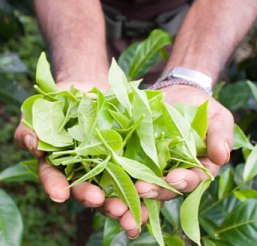
Tea Leaves – Freshly Picked

The common belief is that the Chinese invented tea brewing around 2700 BCE when leaves drifted on the wind into a cup of hot water near to where the legendary Emperor Shen Nung was sitting. He drank the liquid in the cup, took a liking to it, and tea-drinking began. This is a myth – the sort of exotic tale that traders used to tell about the dangers of the spice harvest to drive up the price of goods. There is little evidence to support this story as the origin of tea brewing, and lots of information to refute it. In 1200 BCE there is another reference to tea-drinking at the royal court of King Wen, but no information about what sort of leaf, flower or bark was used to brew the tea – at best, a shaky data point with more interpretation than information value associated with it.

Around 350 ACE we have two solid pieces of information to document the use of tea in China as a medicine. The first is in an update of an ancient Chinese dictionary known as the Erh ya revised by Kuo Po. In this the drinking of tea as a medicinal beverage is clearly described as are the details about the plant and leaves. Geographical information about where the plants grow is also offered and lovely touches like how many men’s armspans the tea-tree trunks are. Clearly, this is tea and not a brewed beverage made from some other sort of plant. Slightly later in that century, there is documentation about the transport and planting of large numbers of tea plants from Yunnan to Szechuan Provinces – the likely beginnings of mass cultivation. Tea drinking as a medicinal beverage and the use of its flavor for culinary use grew in popularity over the next few centuries in China until Lu Yu’s Tea Classic (Ch’a Ching) is published in 780 ACE. So, there is a solid, documented history of tea drinking in China for at least 1700 years.

I’ve always been the sort to peek behind doors and curtains when I walk into a room, and yes, I always surreptitiously opened my gifts before Christmas morning when I was a kid. So for me, the less documented part of the tea-use story is the most fascinating part. If there is a mystery, I love to get digging.

It turns out that indigenous peoples in Burma and Assam (northeast India) pick young tea leaves and brew them, and they have done this for as long as anyone can remember. In other words it is not a learned activity from the neighboring Chinese or from western colonists. On a small scale, before the colonials, these same indigenous people also engaged in cultivation of tea with each family group growing subsistence levels for personal consumption. Additionally, many of these peoples carry tea seeds with them when moving from one settlement to another – indicating the importance of the plant to them.

Pu’er Tea Brick Tang Horse

Burmese cuisine also claims six flavors: sour, bitter, salty, astringent, sweet and spicy. And yes, you guessed right if you knew that the principal “astringent” flavor was represented by tea.

In addition to drinking brewed tea leaves, the Burmese also eat the pickled leaves as a vegetable. Their Laphet Thote which some of you may have enjoyed is a “salad” of fresh fermented tea leaves, lime juice, peanuts, sesame seeds, chili peppers, pounded shrimp and a bit of sugar. Bok choy or other vegetables are often added to extend the dish, or it can be eaten prepared en seul as specified above. Flavorwise, the ingredients read much like Burmese Tamarind Leaf Salad, but the tea leaves add a tremendous pucker factor to the dish that tamarind leaves do not offer – hence its importance in the Burmese flavor pantheon as an astringent. According to state statistics, pickled tea for use as a food (not a beverage) accounted for almost 20% of all tea consumption in Burma in 2006-2007. Laphet thote also has great ceremonial significance in Burma and as such is an important part of food for festivals, holidays and weddings.

Ground or pulverized tea leaves or the use of tea-beverage itself are also used as flavorings from China (tea eggs, to flavorings for soup, vegetable dishes and spring rolls) to Pakistan (a flavoring for chickpeas and other pulses). But to my knowledge, the direct mass consumption or fresh fermented or pickled tea leaves is uniquely Burmese.

Tea leaves are also chewed for a stimulant effect (not unlike betel, tobacco and coca) in Burma, Laos and Thailand and miang production is an important rural industry. Leaves are steamed, wrapped into individual bundles then packed into containers and weighted down. They are then covered with banana leaves. Young leaves are fermented for a few days to a week and mature leaves are fermented for as long as a year.

Pu’er Tea Medallion

So, a survey of other indigenous and national practices in the countries bordering western China’s Yunnan province – popularly noted as the birthplace of tea – show us that tea drinking and the eating or chewing of tea leaves takes place in nearby Burma and Laos and also is evident in Assam and in Thailand. What this suggests is that tea drinking and eating is probably ancient across the entire region and not something that is uniquely Chinese.

Modern molecular systematics also suggests an ancient regional use of tea. A study done by a team of researchers from China and Japan (Phytochemistry 71 (2010) 1342–1349) have used the phytochemicals in tea to create a “family tree” of different tea species and varieties called a dendrogram.

Backtracking a bit about species and varities, Camellia sinensis is the plant that modern tea is harvested from. This has two modern subspecies or varieties, var. sinensis and var. assamica. As you may have guessed, var. sinensis is found mostly in China, with some spread to bordering areas to the west and south, and var. assamica grows from Assam through Burma and into western China where altitude and precipitation favor its growth.

The earliest large-scale production of tea in China was in the form of easily transportable tea “bricks” and was made from C. sinensis var. assamica leaves. Pu’er tea is still made from the same plants and sold in brick form to this day. Chemosystematic analysis of several of the polyphenols from almost 100 tea species or varieties by the Chinese-Japanese research team indicate that the closest “wild” ancestor to these assamica leaves comes from the area near Dali, China and is often referred to as Dianmien tea. The tea species this represents is Camellia irrawadiensis – which is native to Burma, Laos and western China.

So a history of tea is indeed complex and made more so by the repetition of myths and legends. But there is also the value of indigenous practices versus mass cultivation and consumer trade to consider, and the importance of the value of oral history versus the published word at play as well. Modern science is throwing its hat into the ring and is helping to unravel this tangled skein of tea tales. More stories from the Tea-Horse Road and the “discovery” of tea by western colonialists will follow on a periodic basis. (Words and research by Laura Kelley. Photos of modern Pu’er tea bricks borrowed from Google images).

Culinary History Mystery #3: Garum and Nuoc Mam

A post about how Garum and Nuoc Mam are related through a west-to-east technology flow.

You heard it here first folks: Over the course of the next six months or so, the kitchens of Chez Kelley are going to make the fish sauce of the ancients or garum. More accurately, we are going to compare easy or quick methods with traditional outdoor fermentation. If we haven’t been run out of the neighborhood, we will report our results in an end of summer post.

Asian and Italian Fish Sauce

I’ve been interested in making my own garum for a while now, and have a few traditional and modern recipes in hand to try. For those of you not familiar with this culinary wonder of the ancient world, it is a magical, translucent amber liquid that results from the fermentation of salted fish. When used with a heavy hand, the sauce understandably lends a fishy flavor to foods. When used with a lighter touch, it imparts a subtle, undeniably savory quality to dishes that is nothing short of absolutely delicious.

Interestingly, modern science has shown that analysis of remnants from ancient garum production from Pompeii has shown a pattern of free amino acids high in free glutamate followed by sweet-tasting glycine and alanine. These amino acid patterns are similar in modern Italian fish sauce (colatura di alici) and in some modern Asian fish sauces.

Importantly, fish sauce doesn’t appear in Asia until well into the period known as the Early Middle Ages in Europe, almost 1,000 years after its documented use in the west. Its use in China and Japan diminishes after about the 14th Century ACE, because of the rise of soy sauces, but in Southeast Asia, fish sauce use remains strong to the present day. Umami is as savory does.

A Garum Production Site Near Cadiz

Like salt-baked fish, garum production started with the Phoenicians in Carthage who controlled the Mediterranean salt trade from Spain and Morocco across Europe and North Africa to the Levant and well into Western Africa. The largest installations in the western Mediterranean was located at Lixus, on the Atlantic coast of Mauretania (Morocco), with another one in New Carthage (Cartegena) in southern Spain. Spanish garum was renowned as being of the highest quality and was traded widely across the ancient world. The Black Sea (Euxine) was another prominent area for the production of garum. Pompeii was the home of a major garum processing industry. Here, the liquid from already fermented fish was diluted and flavored with a wide variety of substances including wine, must, vinegar, honey and multiple herbs and spices.

The earliest mention of garum fish sauce is to be found in the agricultural writings of the Carthaginian Mago which was translated into Latin after the Third Punic War, but composed probably in the 6th or 5th Century BCE around the time of the rule of Magon (550-530 BCE). Cato the Elder mentions the trade of “Carthaginian fish sauce” in the 2nd Century BCE, and later descriptions can be found in The Deipnosophistae (The Philosopher’s Dining Table) by Athenaeus, I. 4b; II. 67f, c (3rd Century ACE). Athenaeus also mentions the remains of garum or liquamen production called allec which is not unlike the anchovy paste still used in Mediterranean cooking today.

Many different fish were used to make garum or liquamen in the ancient Mediterranean world with Tuna used during their seasonal migrations past Spain and Morocco, and mackerel, sardines and especially anchovies used during other times of the year. In fact, the remains of seasonally available fish from garum processing jars at Pompeii was the way that archaeologists confirmed the August date of the eruption of Vesuvius. Anchovies form the backbone of Asian fish sauce production for export, but many other local salt-water and inland fresh-water fish and shellfish are used for local and regional consumption.

Garum Amphorae from the Pompeii Pottery

The production of garum and Asian fish sauce is virtually the same as well. Fresh fish and salt in some proportion (recipes vary widely from 5:1 to 2:1) are layered in barrels, clay pits or earthenware crocks. Because of their large size, tuna were cut up before fermenting to prevent putrefaction, but most fish – especially the small species are processed whole and intact. In Rome, oregano and other herbs were added at the production phase for both flavor and to suppress bacterial overgrowth, but this step is largely omitted in the production of Asian sauces. The vats are then left to ferment – sometimes covered or sometimes uncovered (Carthaginian and Roman) in the heat and stirred every few days to a week to ensure even enzymatic digestion of the fish.

Basically the digestive enzymes of the very fresh fish digest themselves. The period of time the fish are allowed to digest varies widely between ancient west and modern Asian production, but it ranges from about 3 months to almost 1 year. As the fish ferments and decreases in bulk, bricks or a weighted bamboo mat is placed on top of the mass and presses down on the fish. When completed, the vats are siphoned from the bottom, or drainage holes opened in the bottom and the liquid is allowed to drain out. Multiple simple filtrations later, and the translucent amber fluid begins to emerge. In both east and west, the first draft is considered the highest quality sauce. Lastly the fluid is diluted with water to different degrees for culinary use. As stated above, the fish paste that remains after the garum or fish sauce is withdrawn is also used in the kitchen.

Ancient Romans flavored their garum extensively. For example, one recipe for oenogarum is a 1:1 dilution of garum with must from sweet white wine. This basic recipe can be augmented with both vinegar and pepper, or with crushed garlic, vinegar and salt. Other recipes have garum mixed with red wine must, vinegar, mint, coriander and honey. Commonly used herbs to flavor garum included dill, coriander, fennel, celery, mint, oregano – depending on what the garum was going to be used for. Oxygarum was garum diluted primarily with vinegar and meligarum was garum cut primarily with honey. Modern Italians combine the basic colatura with herbs and other flavors during the cooking process, but generally don’t flavor the fish sauce directly. For example, I cooked a pasta dish last night that had colatura, garlic, lemon zest, capers, chives and parsley in an extra-virgin olive oil base – it was divine.

Making Colatura and Nuoc Mam

Like the Ancient Romans, modern Asians use prepared fish sauce a lot. Vietnamese nuoc mam cham is a great example of this. Recipes for nuoc mam cham (or just nuoc cham) vary a great deal from region to region (and from family to family) but generally have some combination of nuoc mam, lime juice, garlic, chili peppers, rice vinegar and oftentimes sugar. There is also nuoc mam gung in which ginger and peanut or sesame oil is used to flavor the nuoc mam along with lime juice and chilis. The Cambodian tuk trey has similar ingredients to nuoc cham, but adds pounded peanuts to the mix. The Japanese shottsuru mixes fermented fish sauce with malted rice for a darker, deeper fish sauce and in the Philippines; people use calamansi citrus or lemon and pepper to flavor their fish sauce patis.

So, once again, we can identify a product that flowed from west to east and was eagerly adopted by Asians on the Silk Road. The recipes for garum changed and adapted as they moved east and became nuoc mam and nam pla according to cultural preferences and what gifts the Asian seas had to offer. Archaeologists and food scientists are working to confirm these flows and linkages, so stay tuned to this channel to learn more about garum production in the ancient world and in the kitchen of Chez Kelley.

Right now, I’ve got to run, my husband is preparing a rocking Parsi salad with fresh turmeric, onions, cucumbers, tomatoes and lime juice that smells incredible! (Words and Photo of Garum Amphorae from the Pompeii Pottery by Laura Kelley; photo of Modern Asian and Italian Fish Suaces from commercial culinary sites; Garum Production Facility near Cadiz, Spain from Wikimedia, and the photos of colatura and nuoc mam production from google images).

Culinary History Mystery #2 – The Origins of Ice Cream!

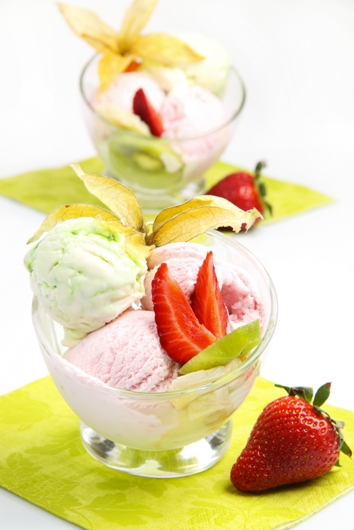
Ice Cream Treats

Triple digit temperatures have hit the Central Atlantic once again, leaving locals and visitors alike to find any way they can to keep the mercury down. Some become shut-ins moving between their air-conditioned homes to their air-conditioned cars to their air-conditioned jobs and back again; some take to the beaches, lakes and pools to swim and soak the heat away; still others turn to cold drinks, ices and of course, ice cream to keep cool.

The origins of ice cream are a convoluted tangle of misinformation and repetition. Alternately the Persians, Chinese, Arabs and Indians are credited with inventing ice cream. This seems to happen because non-dairy puddings and other chilled desserts are treated as synonymous with ice cream – causing a confusion of substance, time and place.

Although the Chinese seem to get the most credit for developing ice cream, the one really important thing bothers me about this version of history is that milk and milk products do not form a large part of the Chinese diet. The Tibetans and of course the Mongolians have lots of dairy in their diets, but the Han Chinese and other ethnic groups do not. Although a modern artisanal cheese industry is today taking root in China and producing Gouda and other western varieties, traditionally, cheese is not something associated with Chinese food. Bean curd-based concoctions, whether fried, or in soup or pudding form, these are often referred to as, “Chinese cheese”. There are only two traditional buffalo milk-based puddings that are sometimes eaten chilled that have any relation to ice cream, namely Jiang Zhuang Nai – the sweet gingery pudding and Shuang Pi Nai – which is a sweetened, cooked custard of milk and egg whites encased between two milk skins.

The pages of Marco Polo’s Travels record a lot of milk being enjoyed as cheese, curds, yogurt, milk, and even a sort of vodka (arkhi) in the Yuan court. So after the 13th Century, milk enters the Chinese diet through the Mongolian-led dynasty. However there is no mention of ice-cream, or anything resembling it.

In the Song Dynasty (960-1279), however, a poem entitled Ode to the Ice Cheese “詠冰酪” was written by the poet Yang Wanli (1127–1206).

It looks so smooth but still has a crisp texture,
It appears congealed and yet it seems to float.
Like jade, it breaks at the bottom of the dish;
As with snow, it melts in the light of the sun.

So it’s still possible that the roots of ice cream in China preceded the rule of the Mongols. But from where did the idea come from? Was it indeed an indigenous Chinese idea, or was it an adaptation of an idea that came from far-away shores?

Although information is hard to come by, a few pieces of information have solid references behind them. Ice harvested in the winter or from ice-covered mountainous regions and then used to increase the storage time of foods has been used in many cultures for millennia. The Persians had yakhchals to keep the ice frozen during the warm seasons and the Chinese and Mesopotamians had icehouses. Documentary sources exist of orders of ice coming from pharaonic Egypt to keep food in the warmest months.

Faloodeh

The first recorded ice-desserts are honey and fruit flavored sorbets offered for sale in Athenian markets in the 5th Century BCE. Both the Persians and the Chinese enjoyed ice or snow flavored with honey and fruit or sugary syrups. For the Persians, sherbet was more of a drink than the frozen dessert we now know by the same name. In the 4th Century BCE, the Persians were enjoying an ancestor of today’s chilled faloodeh pudding made from vermicelli noodles, rosewater, lime juice and a bit of cornstarch for thickening.

The next data point we have is from Pliny, recording Emperor Nero (54 to 68 CE) sending slaves to the mountains to gather snow and ice for as a basis for desserts flavored with berries and nuts. This doesn’t seem to be an advance on what the Greeks were doing five centuries earlier, but rather a simple repetition of a great idea.

So to the first century CE, we have ice and snow-based desserts flavored with fruit, nuts and syrups, in both east and west, chilled drinks on a shaved or crushed ice base in the west, and a rocking, chilled wheat based pudding also in the west. The next innovation that I have come across that walks us a step closer to ice cream is the addition of buffalo milk to the faloodeh. This seems to have occurred in China’s Tang Dynasty (618 to 907 CE) where a frozen concoction of milk, flour and camphor was enjoyed in the royal court.

Interestingly, I’ve seen references (that I cannot confirm) to the Indian use of ice and salt to create an endothermic reaction used to lower the temperature of other substances as early as the 4th Century CE. Also the Arabs are credited with being the first to sweeten ice-desserts with sugar instead of honey or fruit juice. By the 10th Century CE, ice cream was widespread amongst many of the Arab world’s major cities, such as Baghdad, Damascus and Cairo.

Greeks, Persians, Chinese, Arabs, and Indians all can be referenced with developing some part of the process of freezing and flavoring ice, milk or cream to come up with ice cream. Sounds like a Silk Road creation to me – eh? I see ideas flowing around the globe, innovations taking place and being passed on to the next place until a precursor to the modern product emerged.

Today, some amazing innovation in ice cream flavors are coming out of Hong Kong – including: Sichuan pepper and Morello cherry flavored ice cream. Other flavors offered include: black sesame, jasmine tea, pear and port and even gorgonzola ice cream. (Words by Laura Kelley).

Culinary History Mysteries #1: Salt-Baked Fish

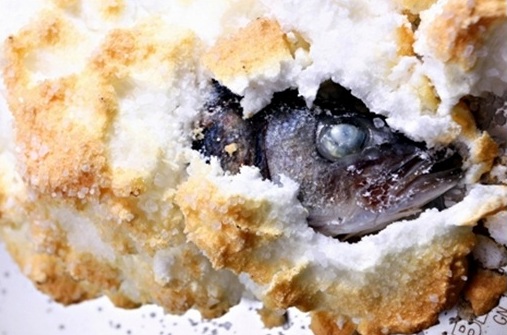
Salt-Baked Fish


My friend and colleague in cyberspace, Chef Miles Collins provided the inspiration for this post by blogging about Salt-Baked Fish – a dish he was prepping for the menu of a family of restaurants in Spain. The restaurants serve up Spanish and related Mediterranean specialties with emphasis on seasonal and locally sourced ingredients. Miles post describes in nice detail how encasing a whole prepared fish in a vault of salt (measured in pounds or kilos) and baking it acts to steam and flavor the fish in a simple but delicious way. Some modern recipes call for adding herbs and spices or lemons to the fish prior to covering it with a thick salt crust while others call for adding lemon zest, lavender or other seasoning to the salt to add flavor. Either way, the fun part comes after the baking when the hardened salt crust is cracked to reveal the moist and delectable fish within.

I have long been fascinated by this dish, because so many nations have claimed it as their own. The Spanish have laid claim to it as have the French, Portuguese and Italians. The Moroccans have a version and the dish appears with East Asian additions such as ginger, star anise and wolfberries on Southern Chinese menus. I can smell a Silk Road Mystery from miles away – so I did a little research.

Even a few hundred years ago, this dish would have been expensive to prepare, because of the huge amount of salt needed to prepare it. Further back, it would have been a feast dish or reserved only for the wealthy and prosperous. The only people who could have originated this recipe on an ordinary budget were people in salt-producing areas. The recipe also seemed a bit to simple to be a European dish – or so I thought.

The earliest reference to anything that resembles Salt-Baked Fish in China is a recipe for Salt-Baked Chicken from Dong Jing in Guangdong during the Qing Dyansty (1644-1911). The recipe actually arose from the earlier preservation of cooked chickens in the salt fields of the area – which gave added flavor. I wasn’t satisfied, however, that this was the root recipe for the Spanish one that Miles blogged about, so I kept on digging.

Thinking about other salt producing areas, I turned next to North Africa or other parts of the Muslim world for the source of the recipe. I found one reference to it in Lilia Zaouali’s Medieval Cuisine of the Islamic World. She writes about Shad Cooked in Salt which she says comes from, “a thirteenth century Muslim cookbook”. Unfortunately, that is the only definitive historical provenance that is offered for the recipe. It might be from Ibn Khalsun, an Andalusian author, but I’m guessing. In that recipe, one puts a layer of salt on a new terra-cotta tile, place the prepped fish on top, add another layer of salt and bake it in an oven – sounds like a good ancestral recipe for the Spanish one being offered at the restaurants that Miles creates menus for. Interestingly, the 13th Century recipe serves the fish with a selection of sauces, including: 1.) an appetizing sauce of oil, garlic, ginger, cinnamon, salt and black or long pepper; and 2.) a dark sauce (called murri) of small fish fermented with salt, oil, aromatic herbs, fennel and coriander. There is a lot of regional variation for murri recipes, but some call for barley, still others for wine.

But, the story doesn’t end in the 13th Century.

The earliest recipe I’ve found to date for salt-baked fish is from the 4th Century BCE in the fragments of Archestratus’ Life of Luxury. Archestratus was a Greek living in Sicily who espoused simple cooking methods, usually with minimal herbs and flavorings added to meats and fish. The only excption to this that I can find is a few strongly flavored sauces to optionally accompany cooked main dishes. His recipe calls for a whole, round white fish such as sea bass, sea bream or snapper that was cleaned and gutted. The fish is seasoned only with a few springs of thyme inserted into the cavity of the fish prior to encasing it in two pounds of salt moistened with water and egg whites. Baked and crust removed, the fish is served simply by drizzling first press olive oil on it.

Further research shows that this dish probably originated with the Phoenicians in Carthage along with their empire built on the salt and garum trades.  So, the simplicity I thought was, “African”, in a way really was.   Obviously, there may be Levantine roots to the dish given the origin of the Phoenicians in the Eastern Mediterranean, but I’ve yet to find direct or indirect evidence of that.  To me, it makes perfect sense  that the Phoenicians originated this recipe – given the extent of their colonies from the Near East to Southern Spain. Interestingly, this may be a recipe adopted by the sea-faring Chinese from contacts in the Mediterranean or Saudi peninsula and as thus may be another dish or ingredient that flowed from west to east. (Words by Laura Kelley, Photo of Salt-Baked Fish by Dextrosa | Dreamstime.com)