No Cuisine is an Island #1: An Indian Shellfish Curry

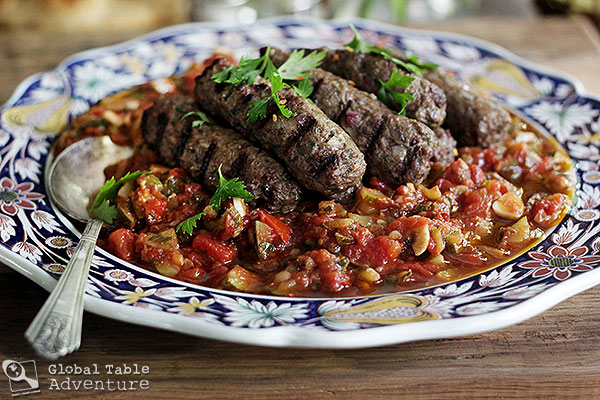
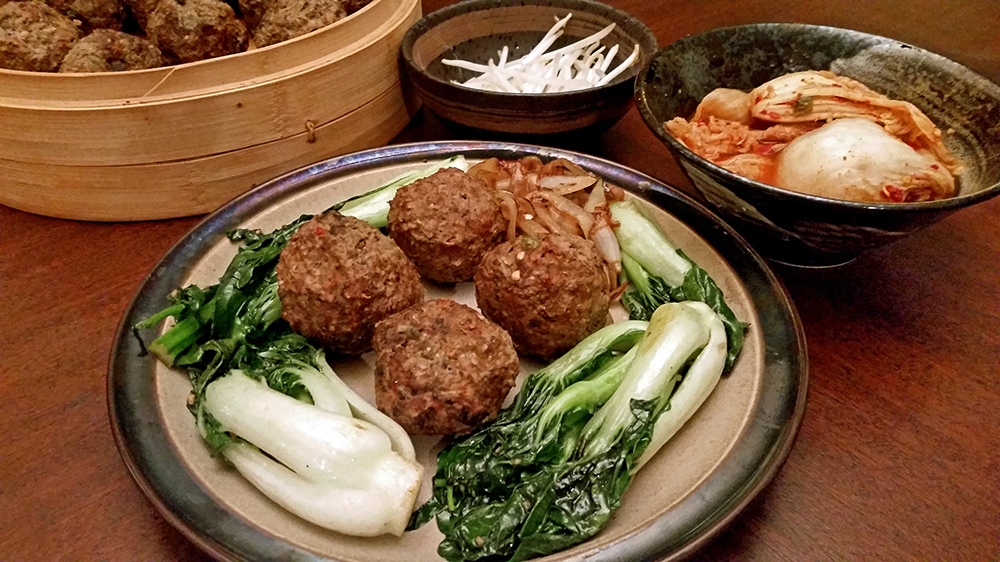
Shrimp or Scallops in a Spicy Tomato Sauce

Shrimp or Scallops in a Spicy Tomato Sauce

The booksigning at the Smithsonian went well. Actually it went very well – we sold and signed all but two of the books purchased for the event. I also really enjoyed meeting people and discussing the book with them. I was pleased to see that people were most interested in the book’s message that cuisines are interconnected, and how dishes we think of as cornerstones of national cuisines actually contain ingredients from all over the world.

To that end, I thought that a demonstration of how globally-sourced ingredients were combined for one of my favorite subcontinental dishes was in order. The recipe is for a delicious sweet, spicy, hot and sour shellfish that will amaze you. The recipe and description are followed by an analysis of ingredients and their origins. What seems like and Indian or subcontinental dish has connections to five continents and many more nations. It is truly global, and should be savored by all.

Shrimp or Scallops in a Spicy Tomato Sauce

Ingredients
1 pound shrimp, peeled, rinsed and deveined, or
1 pound sea or bay scallops
¼ teaspoon cayenne pepper
¼ teaspoon ground turmeric
1 tablespoon mustard or other seed oil
2 tablespoons peanut or light sesame oil
2-3 teaspoons fennel seeds
1 teaspoon yellow mustard seeds
4-5 hot, dried, red chili peppers, torn or chopped
1 large onion peeled, sliced, and separated into crescents
3-4 teaspoons garlic, peeled and chopped
¼ cup of water to moisten (more if needed)
3 teaspoons ground cumin
1 ½ teaspoons ground coriander
1 ½ cups tomato sauce
1 teaspoon tamarind paste dissolved into 2–3 tablespoons lemon juice
1 teaspoon salt
½ cup plain yogurt
1 medium bunch fresh cilantro leaves, chopped (20–30 sprigs)
¼ teaspoon Indian Garam Masala

Method
1. Shuck and devein shrimp or prepare scallops and place into a bowl with the cayenne pepper, turmeric, and a pinch of salt. Stir well, cover, and set aside for at least 1 hour.
2. Heat oil in a sauté pan over medium heat and when hot, sauté the fennel seeds for a minute or two. Remove from heat and let sit while shrimp or scallops marinate in the spices.
3. When almost ready to cook, reheat oil and add the mustard seeds and chili peppers and sauté for a minute. The mustard seeds may pop as the warm up, so you may wish to cover the pan, and shake to move contents. When done, remove from heat and let sit for five minutes.
4. Warm the sauté pan with the fennel and mustard seeds up again and add the onions and garlic. Stir and fry until the onions turn translucent and start to turn golden.
5. Add water to moisten. When water is warm, put in the cumin, coriander, and tomato and mix well. Cook 3–5 minutes to fully warm the spices.
6. Add tomato sauce, tamarind, lemon juice mixture, and salt. Cook to warm and add yogurt and cilantro leaves. Cover and gently cook for 15 minutes. Add garam masala and mix well. (The recipe can be paused here to allow other dishes to finish.)
7. If paused, reheat curry base and add shrimp and cook for 3–5 minutes or until shrimp are fully cooked. Serve immediately with rice or bread.

Now, here comes the fun part. The map below depicts where the ingredients from this dish hail from. Lines terminate only in rough geographic areas, not on specific places:

Origin of Ingredients for Indian Curry

Origin of Ingredients for Indian Curry

The only ingredients that originate in India are black pepper, cardamom and cinnamon, and they are all in the garam masala used to finish the dish. Important certainly, but in this dish, almost an afterthought. Turmeric may also originate on the subcontinent, but no one is sure whether that is the case, or whether it arose in Southeast Asia and was adopted in antiquity by the Indians.

From South America there are chili peppers, and peanuts in the peanut oil, and from North America there is the tomato, and possibly the cayenne pepper. From North Africa (Southern Mediterranean) there is black mustard seed in the mustard oil, and from East Africa there is the lovely, sour tamarind pod. From Southern Europe there is fennel and yellow mustard seed and from Asia minor there is coriander or cilantro. Onions and garlic probably hail from Central Asia (Turkmenistan to Kyrgyzstan) because that is where most of the genetic diversity in Allium species is found, and cumin is Western Asia’s gem, which has been flavoring dishes from ancient Mesopotamia to today.

Cloves and nutmeg used to round out the garam masala of course come from Indonesia’s Moluccas, and the dish is usually served on rice which comes from China’s Pearl River valley, but it can also be enjoyed with bread, or potatoes from the New World.

All of these ingredients made their way to India through movement of people and ideas or through trade and conquest. Some ingredients arrived deep in prehistory, and some are relative newcomers which only arrived in the middle or late centuries in the last millennium. The Silk Road was an important part of the spread of these ingredients and in the forging of links between cuisines and cultures.

To some degree, we tend to think of the world’s borders and biodiversity much as we find them today, but a simple exercise like this shows us that this is not really the case at all, and it hasn’t been the case throughout much of human history. With apologies to locally-sourced aficionados, eating-locally is a relatively modern concept when compared to the global nature of most dishes.

Cultures combine ingredients differently, but most cuisines include ingredients from places beyond their national borders. Each bite connects us with the past and with the people who often travelled great distances to bring variety home. Diversity is a wonderful concept, appreciate it the next time you enjoy a delicious curry or stew or koresh or bhaji or braise or . . . (Words and ingredient analysis by Laura Kelley; Photo of Shrimp or Scallops with Spicy Tomato Sauce by Celeste Heiter; Map of Ingredients drawn by Laura Kelley).

Flowers that Have Changed the World of Food # 3: Cloves

“And somewhere near India is the island containing the Valley of the Cloves.  No merchants or sailors have ever been to the valley or have seen the kind of tree that produces cloves:  its fruit, they say, is sold by genies . . . the islanders feed on them, and they never fall ill or grow old.”

Summary of Marvels  (Ibrahim ibn Wasif-Shah, ca. 1000 CE)

From Indonesia’s Moluccas (Maluku) Islands to the rest of the world come the tiny but powerful flowerbuds we know as cloves.  More accurately, cloves are flowerbuds from the Syzygium aromaticum tree that are picked before opening and dried in the sun until they resemble the little reddish-brown batons used in most of the world’s cuisines.  Mentioned in the Indian Ramayana by the 5th or 4th century BCE (but possibly as early as the 10th Century BCE) and in later Sanskrit medical texts (Charaka Samhita) from the 1st Century BCE wherein they were recommended along with nutmeg to freshen the breath, these little blasts of bittersweet peppery flavor that we know today for their ability to energize other spices was first used for its aroma and as a medicinal ingredient.* **

Cloves Dried and in Flower

Maluku natives and other Indonesians smoked cloves and used them to treat stomach ailments, but did not use cloves in cooking.  These medicinal and aromatic uses were exported as the clove trade began in antiquity.  The Han Chinese used it as a breath freshener to mask the scent of tooth decay and halitosis and used cloves in perfumes and incense.  Additional medicinal uses in China and India included chewing cloves as a dental anesthetic or using an external rub of clove oil as a general analgesic or to lessen the pain of rheumatism.

Aromatic and Medicial Uses of Cloves

It is unclear when cloves started to be used as a culinary spice.  It is used in modern five-spice powders and garam-masalas, but there is little but unreferenced and contradictory information about the antiquity of its use in these culinary mixtures.  In the west, by the time of Pliny the Elder, the clove was still used as an aromatic perfume (NH 12.15), and there is also no mention of the culinary use of cloves in the 4th century ACE Cooking and Dining in Imperial Rome.  In the 6th and 7th century Byzantine writings of Kosmas Indicopleustes and Paulus Aegineta, cloves are still used for their scent and clove oil used topically as medicine.

There are intermediate uses of cloves as both medicine and culinary spice in 9th Century Europe at the Carolingian monastery of St. Gall in Switzerland, where monks used cloves to season their fasting fish (Pharmaceutical Journal and Transactions, 1877; viii, 121) along with pepper and cinnamon and several other indigenous plants and herbs.  In the 10th Century, Andalusian traveller Ibrâhîm ibn Ya`qûb notes that the burghers of Mainz (Germany) used cloves to season their food.

Ingredients for Baharat

Also in the 10th Century, it appears in The Book of Dishes by Ibn Nasr ibn Sayyar al-Warraq, listed as an aromatic along with musk, ambergris, and rosewater.  In this 10th Century tome, it is used along with purslane in a peach drink and in a relish of crumbs, raisins, vinegar and spices.

By the 13th Century, the acceptance of cloves as a culinary spice is widespread. In the 13th Century Andalusian Cookbook translated by Charles Perry, cloves are used in Ahrash, a type of lamb-burger, Mirkâs a cheese-based sausage; Sweetened Mukhallal a meat stew topped with beaten eggs; Madhûna, a baked chicken dish, a stuffed lamb breast; and an egg-based sausage, as well as several other dishes.

Also in the 13th Century, in the Book of Dishes by al-Baghdadi, cloves are used in the recipe Hummadiyya to flavor meatballs and the broth they cook in along with cinnamon, coriander, ginger, and pepper.

Kyrgyz Bal

Although I cannot yet prove my suspicions, my intuition tells me that that Arabs might have been the first to use cloves as a culinary spice and that this was spread to Europe with the conquest of Andalusia and Catalonia in 711 and throughout the known Islamic World during the Abbasid Caliphate, beginning in 750.

Called kutakaphalah in Sanskrit, qaranful in Arabic or karyphyllon in ancient Greek (as well as cengkeh in North Moluccan Malay), it is now hard to imagine the culinary world without cloves.  What would any of the eastern Asian five-spice powders be without cloves, or the subcontinental garam-masalas, not to mention Arab baharat, Moroccan Ras-el-hanout, Tunisian gâlat dagga and Ethiopian berbere?  Thailand’s Massuman Curry is also clove laden as are the many spice rubs used on kebabs in central and western Asia, and cloves are a major constituent in my favorite Central Asian spice tea bal.

Bal
Bal is a ubiquitous Kyrghyz hot drink served to welcome guests, with meals, and almost any time in between. It is a hot peppery tea made of boiled spices sweetened with honey that is delicious – especially on colder days. Although not enjoyed cold in Kyrghyzstan, it also makes an exotic iced tea drink as well.

4 cups water
2 teaspoon ginger, peeled grated and minced
1 stick cinnamon, lightly crushed
10 whole cloves, lightly crushed
1/8 teaspoon ground black pepper
2 bay leaves
3 tablespoons honey

Boil water until it has reached a rolling boil. Add spices and return to a boil. Lower heat and cover. Simmer for 10 minutes then remove from flame and let steep another 10-15 minutes. Strain into teapot or serving vessel. Stir in honey until completely dissolved.

In today’s world, we primarily use cloves in the kitchen, but still have medicinal and aromatic uses for them. In Indonesia, they are still used to flavor kretet or clove cigarettes. Interestingly, modern science is also investigating cloves for their antimicrobial properties (Yukawa et al., 1996; Kurokawa, et al., 1995) and finding that cloves have both good antiviral and antifungal activity in vitro. In antiquity, empires were built on them and men were enslaved and died for them. Remember that and more the next time you throw a bag or a bottle of cloves into your basket at the market. (Words and Research by Laura Kelley; Special thanks to Charles Perry for pointing out the use of cloves in the 10th and 13th Century recipes.  Photo of Dried Cloves from Wikiemedia; Photo of Clove Flowers by Timothy Motley; Photo of Kyrgyz Bal by Baby Kato).

Flowers that Have Changed the World of Food #1: Orchids
Flowers that Have Changed the World of Food #2: Saffron

* (Some claim that archaeological evidence of the use of cloves has been found at ancient Mesopotamian sites. This evidence (a jar purported to contain cloves) comes from excavations at the ancient city of Terqa, Syria (modern Ashara) on the middle Euphrates that dates to 1760-1600 BCE. However, the scholarly community is divided about whether the contents of the jar is actually cloves. With multiple trading “middlemen”, it is not out of the question that ancient Mesopotamians could have used cloves. Their presence in a scribal area could be for purposes of initial or early description. Until definitive evidence is produced, however, such as mass-spec or other type of constituent analyses, I am hanging back on saying these are cloves.)

** (Older scholarly documents (IH Burkill etc) and the internet are awash in references to a 3rd Century Chinese text that mentions cloves, but my perusal of Shen Nong Bao Cai Jing and several other turn of the millenia medical texts finds no mention of cloves at this time).

Patterns, Patterns Everywhere: Spice Mixtures

Many chefs and cookbook authors spend their careers touting the unique aspects of the cuisines they cook and write about.  I’m different from most.  I look around and see nothing but commonalities and connections between the major Asian cuisines and spice mixtures.  In The Silk Road Gourmet Cookbook, I write a lot about how ingredients and dishes swirl in patterns across Asia and tell us a lot about relationships between countries whether through trade, diplomatic relations, cultural or religious connections.

A Masala

One of these patterns in ingredients is found in the makeup of the major spice powders. Whether used as a pickling spice, an advieh, a masala, a curry powder, a spice paste or a five-spice powder, the same spices, with some variations in amount, preparation, use, or local addition of ingredients swirl across the continent from Armenia to Indonesia.

Take for example a relatively familiar Northern Indian garam masala: 2 teaspoons black peppercorns, 2 teaspoons cloves, 2 teaspoons cumin seeds, 2 2-inch cinnamon sticks, ½ nutmeg corm, grated, 2 tablespoons cardamom seeds.  Moving west of India, the first three ingredients are also found in most Pakistani garam masalas, which tend to omit cinnamon and nutmeg, and substitute black cardamom for the green cardamom found in the Indian masala.  The same ingredients as those in the Indian masala can be found in an Afghani char masala – minus the nutmeg and also replacing the cardamom with black cardamom as in Pakistan; and in Iranian advieh  - this time with the addition of coriander seeds and Persian lime powder.  A commonly used modern Armenian pickling spice share four ingredients with the Iranian advieh but adds bay leave and the New World allspice to the mix.

India2 teaspoons black peppercorns
2 teaspoons cloves
2 teaspoons cumin seeds
2 2-inch cinnamon sticks
½ average nutmeg corm, grated
2 tablespoons cardamom seeds
Pakistan1 tablespoon black peppercorns
1 teaspoon ground cloves
4 tablespoons cumin seeds
Seeds from 6 black cardamom pods
Afghanistan1 tablespoon black peppercorns
2 teaspoons whole cloves
1 tablespoon cumin seed
1 tablespoon ground cinnamon
1 tablespoon seeds from black cardamom pods
Iran½ teaspoon ground black pepper
½ teaspoon ground cumin
1 tablespoon ground cinnamon
½ teaspoon ground nutmeg
¼ teaspoon ground coriander
½ teaspoon ground cardamom
¼ teaspoon dried Persian lime powder
Armenia2 tablespoons black peppercorns
1 tablespoon whole cloves
1 cinnamon stick
2 tablespoons coriander seeds
4 bay leaves
2 tablespoons whole allspice

East of India, many Nepalese masalas have the same ingredients as the Indian masala mentioned here – only they tend to add black cardamom to the mix.  One important difference between Indian and Nepali masalas is that Nepali masalas are often roasted, whereas this is an option in Indian cuisine.  Sri Lankan curry powder has the same ingredients as the Indian garam masala except that it adds coriander and fennel seeds and omits nutmeg.  Several additional spices and herbs (pandanus) are also added that are not related to the five or six spice base in most of the other mixes.  Like Northern Indian spice preps, the spices in the Sri Lankan curry powders are sometimes roasted and sometimes not.

India2 teaspoons black peppercorns
2 teaspoons cloves
2 teaspoons cumin seeds
2 2-inch cinnamon sticks
½ average nutmeg corm, grated
2 tablespoons cardamom seeds
Nepal2 teaspoons black peppercorns
½ teaspoon whole cloves
1 ½ tablespoons cumin seeds
1 teaspoon ground cinnamon
½ teaspoon ground nutmeg
2 ½ tablespoons coriander seeds
1 teaspoon black cardamom seeds
Sri Lanka1 teaspoon black peppercorns
¼ teaspoon whole cloves
⅛ cup cumin seeds
½ teaspoon cinnamon
¼ cup coriander seeds
¼ teaspoon cardamom seeds
1 teaspoon fennel seeds
Tibet2 tablespoons black peppercorns
2 tablespoons cloves
2 tablespoons cumin seeds
2 Tablespoons cinnamon stick
¼ cup coriander seeds
2 tablespoons cardamom seeds
2 Tablespoons bay leaves
Khirgizstan1 teaspoon ground cloves
2 tablespoons ground cumin
1 tablespoon cinnamon
2 teaspoons ground nutmeg
2 teaspoons ground cardamom

Masala Ingredients

Tibet’s masala adds coriander seed and bay leaves to the Northern Indian base and Khirgistan’s five-spice mix omits black peppercorns from the Indian recipe all together.  Sichuan peppercorns replace black peppercorns along with the addition of star anise and fennel in varying degrees in Mongolia, China and Vietnam.  Like Sri Lanka, Indonesia’s curry paste uses many ingredients not related to other spice mixes around Asia (candlenuts, laos etc), but still it shares the core of spices (black peppercorns, cloves, nutmeg and coriander seeds) with several of the other powders mentioned.

Mongolia2 tablespoons Szechuan peppercorns
2 tablespoons whole cloves
2 tablespoons broken cinnamon sticks
2 tablespoons fennel seed
6 whole star anise corms
Southern China2 tablespoons whole Sichuan peppercorns
36 whole cloves
5, 2-inch sticks of cinnamon, crushed
2 tablespoons fennel seed
12 star anise corms
Vietnam2 teaspoons Sichuan peppercorns
½ teaspoon ground cloves
1 tablespoon ground cinnamon
1 tablespoon ground fennel seeds
8 star anise corms
Indonesia1½ tablespoons black peppercorns
8 whole cloves
1 teaspoon nutmeg, freshly grated
2½ tablespoons coriander seeds

A teaspoon here, a tablespoon there and the proportions of the spice mixtures change – but the ingredients remain the same – to some degree across the entire continent.  Likewise, we may be different ethnicities or different religions, but to some extent, the foods we eat are part of the cultures we share – all of which have been shaped by the Silk Road (Words and pattern analysis by Laura Kelley).

Take Two Curries and Call Me in the Morning #2

Once again, its time to look at some of the health benefits of curries and their constituent ingredients. Like the previous post that extolled the medicinal virtues of turmeric, marigold, coriander, black onion seed and bay leaves, this post will look at the uses of cumin, black cumin, cardamom, black cardamon and fenugreek both in the kitchen and in the armamentarium of treatments used by doctors and pharmacists around the world. Modern scientific research is also cited to discuss the antimicrobial, antioxidant or anti-inflammatory effects of these herbs and spices.

Cumin

Cumin seeds (fruits), also known as Cuminium cyminium has been known for its culinary and medicinal uses since antiquity. Called kamunu in Akkadian, the spice was widely used in ancient Mesopotamia and spread to the rest of the world from its origins in Western Asia. In traditional medicine it is used as an anti-inflammatory to treat a wide variety of ailments from stomach upsets to colds, asthma and fever, but modern science is finding that it has powerful antimicrobial properties as well. Recent research has shown that it can be used to inhibit the growth of bacteria on food as well as an inexpensive adjuvant for oral fungal disease. J. Appl Microbiol. 2011 Jan 12.1365-2672; J. Med Assoc. Thai 2010 Dec; 93 Suppl 7:S227-35; and Indian Dent Res. 2010 Jul-Sep;21(3):334-6.)

Black Cumin Seeds

Black Cumin

Often confused with black onion seeds in the literature, black cumin Bunium persicum is the earthy, smoky spice that is unrelated to cumin. It’s scimitar-shaped seeds, use of which first arose in Central Asia or Northern India are used in traditional medicine in Western, Southern and Central Asia to treat a wide variety of inflammatory conditions from colic and other digestive illness to irregular menstrual periods. Modern science is finding black cumin useful in reducing pain and has shown antioxidant and free-radical scavenging activity in vitro. (Pharm Biol. 2011 Feb;49(2):146-51. Epub 2010 Oct 13; Pak J Pharm Sci. 2010 Jul;23(3):300-4.)

Cardamom

Cardamom is not just for coffee, curries and desserts anymore! Green cardamom, also known as Elettaria cardamomum hails from the southern Indian subcontinent and Sri Lanka and has been traded and used as a culinary spice for millennia. Cardamom is broadly used in South Asia to treat infections in teeth and gums, to prevent and treat throat troubles, congestion of the lungs and pulmonary tuberculosis, inflammation of eyelids and also digestive disorders. It also is used to break up kidney stones and gall stones, and was reportedly used as an antidote for both snake and scorpion venom. Recent research is also uncovering that the phytochemicals in cardamom have antimicrobial and anti-cancer properties. Other research has found that cardamom can reduce blood pressure in stage 1 hypertensive individuals as well. (Pak J Biol Sci. 2010 Apr 1;13(7):340-3; Recent Pat Food Nutr Agric. 2010 Jun;2(2):166-77; Indian J Biochem Biophys. 2009 Dec;46(6):503-6.)

Black Cardamom

Black Cardamom

Despite the similar name, black cardamom, the large, dark, smoky flavored seed, Amomum subulatum, is only distantly related to green cardamom. Medicinal and culinary use of black cardamom arose in Nepal and the Himalayas and spread into Eastern Asia and Northern India from there. A distinct subspecies of black cardamom is cultivated and used in northern China and is used throughout Eastern Asia to treat a wide variety of digestive ailments, malaria and enlarged spleen of other causes. Recent work is showing that is has powerful metal-chelating and antioxidant properties, and can both prevent superoxide generation as well as scavenge them once they arise (Biofactors. 2007;31(3-4):219-27; Biofactors. 2007;29(2-3):147-57.).

Fenugreek

Fenugreek is an ancient spice used in medicine and in the kitchen from Europe to China. Use of Trigonella foenum-graecum probably started in the Eastern Mediterranean, but its use is so ancient and so broad that it is difficult to determine its origin. Like cilantro, both the leaves and the seeds are widely used both in the kitchen and out. Traditionally used to increase the flow of milk in lactating women, it also has uses as a general anti-inflammatory and is used in Chinese medicine to increase kidney health. Modern science is confirming the benefits of these traditional uses as well as identifying new uses for the herb such as pancreatic a-amalayse inhibition (anti-diabetes) and as a promoter of male sexual health. (BMC Complement Altern Med. 2011 Jan 20;11:5; Phytother Res. 2011 Feb 10.3360).

1001 Tales from the Spice Trade: Cinnamon

We take so much for granted these days. Almost every household cupboard has ground cinnamon or cinnamon sticks in them. Mass produced cinnamon is cheap and readily available at almost every market and even higher quality cinnamon sticks from the far reaches of the globe are accessible and relatively affordable via the internet. In times past, however, spices were rare and expensive and significant portions of household income were spent on them for their medicinal and nutritive qualities and well as for the maintenance of one’s social standing through conspicuous spice use.

Ceylonese Cinnamon Sticks

For Greeks, Egyptians, and others in the ancient world, spices came from far-away places. The men who gathered them risked their lives to do so, and their bravery was compensated for by high demand and high price for their sometimes intermittent supply of spice. As early as the 5th Century BCE, Herodotus wrote in his Histories that the “Arabians” obtained cassia by traveling to the shores of a great lake and gathering cassia on the shores. However, the shores were patrolled by a huge bat-like, winged creatures which screeched horribly and attacked the spice gatherers. To protect themselves from the creatures, the spice gatherers covered their bodies and their faces with the hides of oxen and other skins leaving only holes for the eyes. Dangerous and hot work – to harvest a rare bark.

Another legend related by Herodotus is that cinnamon came from the land of Bacchus. Great birds were said to collect branches of cinnamon and make their nests with it. The nests were constructions dappled with mud and affixed to sheer cliff faces. Still more wonderful was the mode in which they collected the cinnamon. The “Arabians” cut meat and joints from their beasts of burden such as oxen and asses and place near the nests to lure the birds from their nests. Herodotus tells us that the cinnamon gatherers withdrew to a distance and allowed the birds to swoop down and seize pieces of meat and fly with them up to their nests. The nests, not being able to support the weight broke off and fell to the ground, whereupon the Arabians returned and collected the cinnamon for sale abroad.

Cinnamon – Botanical Print

Legends like these abounded for centuries. In the 4th Century BCE, Theophrastus tells us in his Enquiry into Plants ( IX v. 1-6) that cinnamon and cassia came from bushes with many branches that grew in deep glens and that in these there are numerous snakes which have a deadly bite which guarded the bushes. The men who harvested the bark and branches protected their hands and feet from the snakes and when they were through they left one portion of the harvest behind for the sun in gratitude for being spared from the snakes. The portion left for the sun was said to ignite spontaneously and perfume the air with a sweet incense as the gatherers departed the glens.

Still other legends tell of flying snakes guarding cinnamon trees and gatherers having to burn noxious incense to chase the snakes away and gather the bark in safety.

The wonderful thing about all these legends is that they are not just accidental tales from the active imaginations of traders and travelers. They are deliberate attempts to drive the price of commodities as high as possible by making the collection of cinnamon and cassia sound very dangerous and difficult to do.

An interesting aside is that what we call cinnamon (which is either true cinnamon or cassia or a blend of the two spices) is not what traders and merchants in the ancient world would have considered cinnamon. Long ago, cinnamon was thought to be the whole branch – wood and inner and outer bark – with the delicate newer growth considered of higher quality than the wood and bark close to the roots of the tree. The bark devoid of inner wood was called by another name (often cassia). Eventually, the whole branch fell out of commercial trade and the bark only became known as cinnamon.

Today, a number of different species of Cinnamomum tree are cultivated and sold as cinnamon. There is Cinnamomum verum – the “true cinnamon” from Sri Lanka that cultivates only the inner bark and was traded along the early silk road; C. burmanni which is Indondesian cinnamon; C. loureiroi or Saigon cinnamon and lastly, C. aromaticum or Chinese cinnamon which uses all layers of bark and has a more harsh flavor than Ceylonese cinnamon. Medicinal cinnamon is the “true cinnamon” from Sri Lanka, not cassia from China and Southeast Asia which can have hepatotoxic effects when taken in medicinal doses.

So next time you use cinnamon or cassia to flavor a sweet treat or to make a savory Asian curry or stew, think on the dark and dangerous (and fictional) tales of the ancients who gathered these spices along the silk road. (Words by Laura Kelley; Plate of Cinnamomum varum Kohler, and Photo of Cinnamon sticks from Wikimedia)

Take Two Curries and Call Me in the Morning #1

Nutritious Curry

One of the food-related trends in modern society is that of nutraceuticals, that is, people seeking foods that will enhance some physical characteristic or another that they value. From foods to boost brain power to foods to aid weight loss, or foods to boost immunity. The quest goes on for the quick food fix, usually as an alternative to a healthy lifestyle.

Some of the popularly published articles touting the benfits of various foodstuffs have no scientific support at all, and simply invoke “scientific evidence” like some sort of magic to support their claims. Others cite the tangible biochemical properties of the fruit, vegetable or substance and hypothesize the benefit that these chemicals will have on a person. Worst of all are self-reported, long-term studies that often confuse coincidence with causality and draw sometimes ridiculous conclusions from analysis of their constituent surveys, such as ‘high peanut butter consumption linked to longevity in nurses’.

In truth, rigorous trials with living animals or people are the only way to really see if any of these foods or their constituent chemicals have any affect whatsoever on immune response, healing or other characteristic in a living system. The reason for this is because living systems are very complex. Just because a food is rich in phytochemicals or some other property doesn’t mean that it will help your overall health when eaten. This is because of the complicated picture of overall health, metabolism, bioavailability and competing factors.

That bit of skepticism voiced, there is a growing body of scientific evidence, largely coming out of Asia, that lends support to the claims that some Asian spices and ingredients have anti-inflammatory effects and will function as immune modulators or that they prevent injury or even speed healing in response to direct injury.

Very roughly speaking immunity is modulated in part by a large selection of chemicals call cytokines. Some of these substances are “pro-inflammatory” that is they increase the number of cells that engulf foreign particles (phagocytes) or increase the fluid content of tissues to help stop the spread of injury. Others are “anti-inflammatory” and have to opposite effect. Others are fibrogenic and help speed tissue replacement (however imperfect) of damaged tissues. Still others have other functions.

In addition to cytokines, we’ve all heard that antioxidants are good things that bind with “free radicals” produced by an over abundance of reactive oxygen and nitrogen chemical compounds and thus reduce the oxidative stress on tissues. Well, another way that Asian spices are shown to have specific health benefits on living systems is in their function as antioxidants.

Turmeric

Turmeric, the lovely root, originating on the Indian Subcontinent, which when ground and dried forms the bright orangey-yellow powder that is used to color curries and stews and to offer a thick blanket of flavor that calms the extremes of other spices and unites them into a gentler whole. Also known as curcumin, systemic turmeric has been found to reduce both acute and chronic radiation-induced skin injury in animals after they received a single 50 Gray exposure to the hind leg. This reduction of injury comes about because the curcumin downregulates both inflammatory and fibrogenic cytokines. The coolest part of this testing, which began in China and is now being continued with US-NIAID funds, is that similar effects were noted when the curcumin was administered both before and after exposure. This means that this experimentation could lead to preventatives AND treatments for radiation-induced skin injury. (Int J Radiat Oncol Biol Phys. 2006; 65(3):890-898.)

Marigold

Marigold petals, also known as Calendula officinalis, originated in western Asia and are still widely used in Black Sea and Caspian regions as well as in Southern Russia. The spice that is used to color foods and unite straining flavors in a way similar to the southern Asian use of turmeric, is also used as an ingredient in many teas. Used for centuries as a medicinal herb, modern science is just beginning to find that marigold is also a powerful antioxidant in concentrations as low as .20 micrograms per milliliter.

Additionally, marigold flower extract acts to prevent deliberately induced chemical damage to the liver and kidneys in a dose-dependent manner when given before the insulting injection in doses of 100 and 250 milligrams per kilogram of body weight. The mechanism of this protection is still being studied in India, but is believed to be due to marigold’s inherent antioxidant activity. (Pharmacology. 2009;83(6):348-55; Indian J Exp Biol. 2009 Mar;47(3):163-8.)

Coriander

The spice that is ubiquitous in Asian cooking – whether as a seed, a powder, fresh leaves or roots – coriander or Coriandrum sativum seems to have a multitude of benefits on specific systems. Like marigold, its antioxidant properties help to protect against oxidative injury to the liver when administered in doses of 100 to 200 milligrams per kilogram of body weight in animals. Additionally, when studied in India in living animals, coriander has a strong diuretic effect which may make it useful in the treatment of hypertension. (Food Chem Toxicol. 2009 Apr;47(4):702-8. Epub 2008 Dec 29; J Ethnopharmacol. 2009 Feb 25;122(1):123-30.)

Black Cumin

The tiny scimitar shaped seed with the smoky bite that hails from the northernmost reaches of the Indian subcontinent or possibly Central Asia has recently been shown to protect animals against lung injury. Administration of black cumin – Bunium persicum – in the form of volatile oil was shown to decrease the amount of fibrotic tissue, granuloma and necrosis in the lung after injury. The mechanism of this protection is still under investigation, but might be related to suppression of inducible nitric oxide synthase and an increase in surfactant protein D in the lungs. (Acta Histochem. 2009 May 8.)

Bay Leaves

Here’s a spice with real wow factor! Laurel nobilis, bay leaves, which hail from Asia Minor, are now found widely all around the Mediterranean and were associated with the God Apollo by the Greeks also seem to have some fantastic effects on glucose and lipid profiles in people with type 2 diabetes. Pakistani researchers mounted a small, placebo controlled, clinical trial in which they administered 1, 2 or 3 grams of ground bay leaves per day to diabetics for 30 days. They found that all three doses reduced serum glucose from 21 to 26%; total cholesterol decreased, 20 to 24%; and low density lipoprotein (LDL) cholesterol fell 32 to 40%. High density lipoprotein (HDL) cholesterol increased 29 and 20%, and triglycerides also decreased 34 and 25% after 30 days. These results need to be repeated in larger trials and examined carefully for toxicity profiles etc, but as a first shot across the bow, modern science seems to have found a real winner in bay leaves. (J Clin Biochem Nutr. 2009 Jan;44(1):52-6.)

As you can see, modern science is beginning to confirm the facts that subcontinetal cooks have known for millenia – many of the spices in your average curry are really quite good for you. So, as the lines between food and medicine continues to blur – the next time you are feeling a bit peaked, take two curries and call me in the morning. (Words by Laura Kelley. Photo of Nutritious Curry © Mayangsari | Dreamstime.com)

Flowers That Have Changed the World of Food #2: Saffron

“Your lips drop sweetness like honeycomb, my bride, syrup and milk are under your tongue, and your dress had the scent of Lebanon. Your cheeks are an orchard of pomegranates, an orchard full of rare fruits, spikenard and saffron, sweet cane and cinnamon.”

Fresco of Saffron Gatherers from Akrotiri

What substance was revered by the ancients, was used in Cleopatra’s baths to enhance her beauty and pleasure, was used to treat melancholy and a multitude of gastrointestinal ailments and fetched is weight in gold in Philadelphia markets when brought in by Pennsylvania “Dutch” farmers? The answer is, of course, the stamens from the Crocus sativus flower also known as saffron.

The earliest pictorial reference we have of saffron cultivation comes from the Minoan civilization on Akrotiri which has a number of frescoes of women cultivating the flowers and using them to treat various illnesses. The eruption of the Santorini volcano that destroyed their civilization provides the date of 1600-1500 BC as a fixed point in time for the cultivation of saffron by the Minoans. The cultivation and use of saffron is probably much older than that, however, because the flower that yields the precious spice hails from Southwest Asia. The Minoans likely came to saffron as a traded item from the east as part of their great network of sea and land traders that ranged the ancient Mediterranean.

Native to Southwest Asia, the Crocus species that produces the valuable reddish-orange hued stamens treasured by cooks around the world to color and flavor their dishes was created by men and women who used directed selection to breed a new species of flower with extremely long stamens. That this occurred some 20 centuries before the Common Era is worthy of a bow to the agricultural and commercial sophistication of the early civilizations involved in its use and trade.

The peoples of the Fertile Crescent used saffron as a pigment in cave paintings as early as 40,000 – 50,000 years BCE, and later the Sumerians used it medicinally in remedies and potions. By about 4000 years ago, the culinary use of saffron had begun, as witnessed in the early Hebrews revering it as a sweet-smelling spice in the words of the Song of Solomon. The first scientific documentation of saffron’s use was noted in an early botanical produced for Assyrian King Ashurbanipal seven centuries BCE.

Modern Saffron Cultivation

Although it is unclear when the cultivation and trade of it began, Persian use of the flower as a dye, perfume and medicine was truly prolific and by the 10th Century BCE, there is evidence of mass cultivation at Derbena and Isfahan. By 500 BC, the Persians had spread cultivation of the saffron Crocus corms throughout the Persian Empire along Silk Road routes and cultivation in Northern India and Kashmir was formally underway.

How saffron reached China is a matter of debate. Some sources (the Bencao Gangmu) place its arrival as early in the 16th Century BCE and brought by Persian merchants along the Great Silk Road. Other sources attribute the arrival in China as later in the 3rd Century CE and attribute Kashmir as the source of the flower. It’s likely given the skew of time between the two documents that there were multiple introductions of the spice into China with the earliest coming in 1600 BCE or sometime before.

In Greco-Roman times the Phoenicians dominated the Mediterranean trade of the spice, and when the Romans conquered and later settled Gaul at the dawn of the Common Era, they brought saffron with them into Europe. European centers of cultivation grew up after the decline of the Roman Empire and the Crusades cut European traders off from important sources of cultivation and trade. First Basel then Nuremburg, and then by the 14th Century, trade centers sprung up in the coastal regions of Eastern England.

Saffron Threads

Saffron cultivation came to North America with the arrival of Anabaptists originally from Eastern and Central Europe who settled in the Susquehanna River Valley and later became known as the Pennsylvania “Dutch”. These settlers set up a profitable trade in saffron in the 1730s and 1740s with Spanish settlers in the Caribbean that earned its weight in gold for the saffron farmers. This trade persisted until the war of 1812 ruined the trade by the destruction of the American merchant vessels that had been used to ship the spice to the Caribbean.

So once again trade along the land and maritime routes of the Silk Road was instrumental in spreading the use of saffron throughout the ancient known world. From Fertile Crescent and Persian roots use of the herb for dyes, perfumes, medicine and culinary purposes spread first to Greece and other Mediterranean countries and then to the rest of Asia, Europe and North America. Highly valued as a drug and aphrodisiac and used by Alexander the Great to heal his battle wounds, saffron’s golden hues and rich blanket of gentle flavor has been used as an ingredient in wine, rice, curries and stews for millennia. It is a spice that has roots as old as human civilization and was an integral part of the early globalization brought about by the Great Silk Road. (Words by Laura Kelley)

Flowers that have Changed the World of Food #1: Orchids

Monday morning was magical. I woke up in the middle of a snow-covered wood not having realized that it had snowed overnight. I looked out onto the ground, blanketed with a thick covering of pure white powder, and felt just like a kid who had slept with a spoon under her pillow – I didn’t have to go to work today – yeah! One by one my children and husband woke up to a similar feeling of elation and we all set about doing recreational activities as the snow continued to fall through most of the day.

Harlequin Phalaeonopsis

With winter’s green garden turned to white, I turned inward in search of life and found in our home a riot of botanical color bursting forth. Every windowsill had an orchid in bloom and there were massings of them in areas of the house where we have large picture windows. With colors as deep as the wine-dark sea to almost pure white, waterfalls of Phalaeonopsis and Paphiopedliums cascaded down before me. A few Doritinopsis and Miltonia still clung to their precious flowers long past their prime and a couple of Oncidiums lent a sickly sweet scent to the air about them – kind of like someone using too much perfume to try to mask an unpleasant odor.

I set about photographing some of them as I do every year and as I arranged and clicked my way through the collection I began to wonder how I could relate this aspect of my life to the blog. I thought immediately of the culinary contribution of orchids to world cuisine – namely vanilla flavor which is produced from the seed pods of the vanilla orchid – most commonly Vanilla planifola.

Vanilla was originally cultivated and used as a flavoring for foods by the Pre-Columbian Mesoamerican peoples. The first to cultivate vanilla were the Totonac people, who inhabit the Mazantla Valley on the Gulf Coast of Mexico in the present-day state of Veracruz. In the fifteenth century, Aztecs from the central highlands of Mexico conquered the Totonacs, and the conquerors soon developed a taste for the vanilla bean. They named the bean tlilxochitl, or black flower, after the pollinated seed pod, which shrivels and turns black after it is picked. Then as now, vanilla flavor is introduced into food either by mixing in diced whole pods, using ground powdered pods or by soaking the pods in alcohol (now, often rum) to extract the flavor.

Phalaeonopsis – Big Pink Thing

Introduced into Europe and to Silk Road trade by Spanish conquistador Hernán Cortés in the 1520s, vanilla was quickly adopted to flavor breads, desserts, puddings and occasionally meat dishes as well on the continent and across Asia. Vanilla remained rare and expensive until a way was found to cultivate it outside of Mesoamerica in the mid 1800s when a commercially viable method of hand pollination was discovered. Today, most vanilla is produced in Madagascar and Indonesia through the cultivation of the Vanilla planifola orchid which grows in long twisting and climbing vines. Other types of vanilla orchids cultivated for use in foods include Vanilla tahitensis grown in the South Pacific and Vanilla pompona grown in the West Indies, Central and South America.

The ease of growing and extracting the flavor of vanilla caused a revolution in the preparation of food. On the one hand, the flavor was used more widely than it had been in the past, but on the other, floral flavorings that were used prior to the introduction of vanilla were sometimes supplanted. For example, floral preparations like Fiore di Sicilia today used to flavor Pannetone and other baked goods, moved into more limited use because of the difficulty (and seasonality) of its production. Made from combining the essences of thousands of flowers – to no set recipe according to Chef Miles Collins – Fiore di Sicilia was out competed by the stronger and more easily produced vanilla – especially after global production of vanilla began in the 19th Century.

In Asia, vanilla – to some degree – supplanted the use of pandanus or screw-pine to flavor foods. Originally cultivated and used on the Indian subcontinent, pounded pandanus leaves can impart a vanilla-chai flavor to foods and is commonly used to flavor rice, and dessert dishes in this way in South and Southeast Asia. In Thailand, iced drinks from young coconuts with pandanus flavor are popular, and in Indonesia, pandanus leaves are made into ice cream like concoctions. Furthermore, the leaves appear more frequently in sweet puddings or custards based on sticky rice. The Thais use pandanus to wrap marinated meats that are then fried and there are many uses for pandanus flavor in fish and seafood recipes (I have a couple of delicious Cambodian recipes). It is interesting to note that pandanus or its extract kewra is still used to flavor seafood dishes in Southeast Asia, although in Tahiti – a vanilla producing country – it has been replaced by vanilla.

Vanilla Orchid Seed Pods

Today, thousands of metric tonnes of vanilla are produced and globally traded – with Asia now leading in the production. From humble Mexican origins, use of the vanilla orchid to flavor food has spread around the world. So, as you join me in tending to your flowering Phalaeonopsis, realize that it is one of a lineage of flowers that had an important influence on cooking and world cuisines as its travelled The Silk Road. (Words and photographs by Laura Kelley)